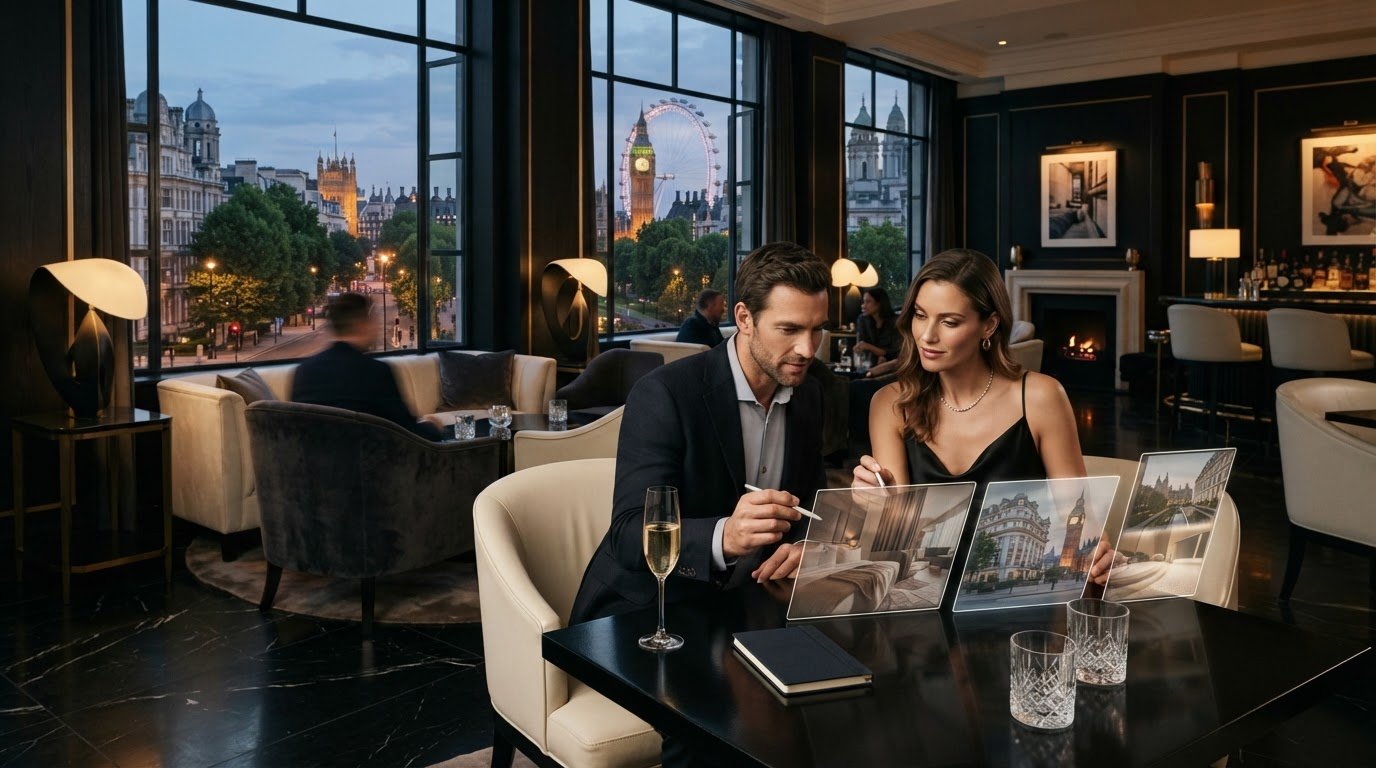
The most celebrated address isn’t automatically the right London stay. Choosing among Luxury Hotels London offers is easier when you start with the trip you want, not the name above the entrance. A central location can make sightseeing more convenient, while a quieter setting may better suit a business visit or a slower city break.
Hotel descriptions can make every stay sound exceptional, but the neighbourhood, atmosphere and room details shape your actual experience. Start with where you expect to spend your time, how you like to unwind and what kind of setting helps you feel comfortable. Then compare properties against those priorities rather than relying on a familiar name or a striking photograph.
This guide compares London’s luxury hotel styles and neighbourhoods, with practical ways to assess location, room arrangements, facilities and booking terms. Luxury Bookings AE facilitates luxury hotel stays worldwide, including London, for both short visits and longer stays. Use the criteria below to narrow your options and make a considered booking.
Key Takeaways
- Compare Mayfair, Knightsbridge, Westminster, Covent Garden, Fitzrovia and Shoreditch by atmosphere and how each supports your plans.
- Choose between a grand hotel, a design-led property and a boutique stay by considering the setting and service style you prefer.
- When comparing Luxury Hotels London, weigh privacy, dining, wellness and shared spaces against how you’ll spend your time.
- Before booking, compare the specific room configuration, accessibility information, facilities and terms for your stay.
- Luxury Bookings AE facilitates London hotel bookings for both short visits and longer stays.
Luxury Hotels in London: Start With the Experience You Want
London’s luxury stays range from grand hotels with a sense of ceremony to intimate boutique properties shaped by distinctive design. Neither style is automatically the better choice. The right one depends on your itinerary, the atmosphere you enjoy and the details that will make the stay more comfortable.
Begin with the purpose and pace of your visit. London’s attractions and visitor experiences span the city, as an overview of Tourism in London illustrates, so a hotel’s character matters alongside its position. A well-known property may have a compelling setting, but it may not suit an itinerary centred on another neighbourhood, a particular room arrangement or a quieter retreat.
What makes a London hotel feel luxurious?
Luxury is more than an impressive entrance. Attentive service, a smooth arrival and thoughtful details can make a stay feel personal, while a considered setting offers a welcome pause between outings. Privacy may matter most to one traveller; another may prefer an inviting lobby or lively shared spaces. Decide which qualities are important to you before comparing properties.
Heritage hotels often appeal through architectural character and a formal sense of occasion. Contemporary properties may emphasise clean lines, modern interiors and a fresh design perspective. Neither style is inherently more luxurious. Facilities are just as individual: dining, wellness spaces and family amenities can all factor into a decision, but their presence and details vary by property. Compare what is provided with how you expect to use it.
Which priorities should guide your hotel shortlist?
Build your shortlist around the purpose of the trip, then rank your preferences instead of expecting one property to excel at everything. This gives you a practical way to compare Luxury Hotels London options beyond reputation alone.
- Business: Prioritise a location that works for your meetings, a comfortable room for rest and facilities that support your routine.
- Cultural: Consider the places you most want to visit and whether you prefer a quiet base or an energetic hotel atmosphere.
- Celebratory: Decide how much the setting, privacy, dining and sense of occasion should contribute to the trip.
- Family: Focus on the room configuration, practical facilities and space your group needs to feel at ease.
Next, rank four considerations: atmosphere, location, room needs and facilities. Mark each as essential, desirable or optional. If privacy is essential but a particular amenity is only desirable, you have a clear way to weigh trade-offs. Keep this list beside you as you compare properties, so polished descriptions are measured against your actual plans.
A good hotel match makes your London itinerary more comfortable, not more complicated.
London Luxury Hotel Neighbourhoods: Choose a Base for Your Itinerary
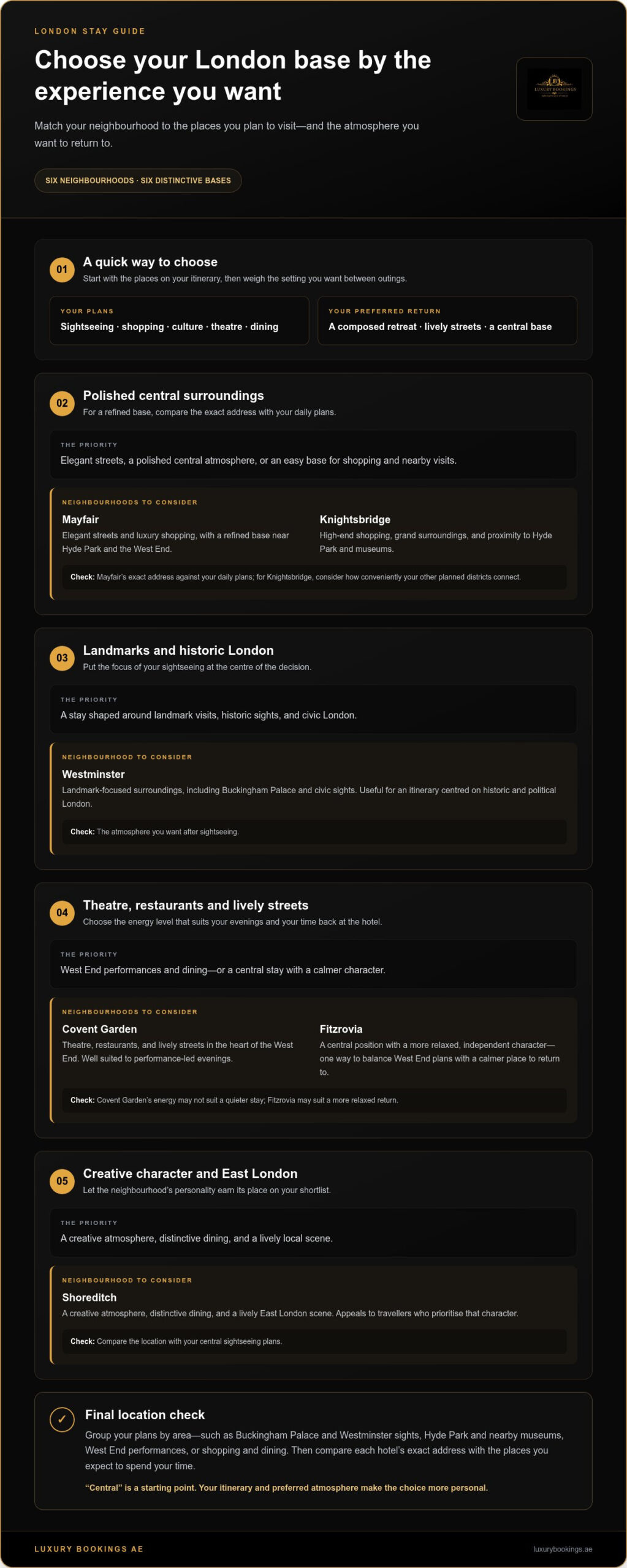
A hotel’s address shapes the rhythm of a London stay. The right neighbourhood puts preferred experiences within easier reach; a less suitable base can mean more time working out how to get between them. For a first visit, a central area can make it easier to combine landmark-rich districts, but “central” alone doesn’t settle the choice. Consider whether you’d rather return to a quieter street or step straight into theatre, dining and evening activity.
Group your plans by area: Buckingham Palace and Westminster sights, Hyde Park and nearby museums, West End performances, or shopping and dining. The VisitBritain site offers broader destination context, but your itinerary is the most useful guide to where you should stay.
| Area | Likely strengths | Traveller considerations |
|---|---|---|
| Mayfair | Elegant streets, luxury shopping and a polished central atmosphere. | Consider it for a refined base near Hyde Park and the West End; compare the exact address with your daily plans. |
| Knightsbridge | High-end shopping, grand surroundings and proximity to Hyde Park and museums. | A strong fit for shopping and culture; consider how conveniently your other planned districts connect. |
| Westminster | Landmark-focused surroundings, including Buckingham Palace and civic sights. | Useful for an itinerary centred on historic and political London; consider the atmosphere you want after sightseeing. |
| Covent Garden | Theatre, restaurants and lively streets in the heart of the West End. | Well suited to performance-led evenings, though its energy may not suit those seeking a quieter setting. |
| Fitzrovia | A central position with a more relaxed, independent character. | Consider it for balancing West End plans with a calmer place to return to. |
| Shoreditch | Creative atmosphere, distinctive dining and a lively East London scene. | Appeals to travellers prioritising that character; compare the location with your central sightseeing plans. |
Which London area suits a first visit?
If your days span several central districts, a central base can simplify the overall plan without putting every attraction on your doorstep. Mayfair or Fitzrovia may suit you if you want a composed place to return to; Covent Garden fits a schedule shaped by theatre and dining. Westminster puts landmark sightseeing in focus, while Knightsbridge is well placed for shopping, Hyde Park and museums. Choose the atmosphere you want as well as the activities you have planned.
How should business and culture trips shape the location?
For business, start with meeting addresses and transport connections, then compare hotels against those priorities. For culture, group performances, museums and shopping by area to avoid scattering plans across the city. Routes and journey times depend on the hotel’s precise address, transport and itinerary, so assess each property against your destinations rather than relying on a neighbourhood name alone.
Use this area-by-area framework as you compare Luxury Hotels London options. Once you have a preferred base, explore luxury hotel stays that align with your London plans.
Grand Hotel or Boutique Stay? Compare London Luxury Hotel Styles
London’s luxury hotels offer different kinds of stay. A heritage grand hotel may centre its appeal on a stately setting and a sense of occasion; a design-led property can feel more contemporary, while an intimate boutique stay may offer a distinctive, smaller-scale atmosphere. The choice isn’t simply about which looks most impressive. Consider how you want the hotel to shape your days, evenings and time between outings.
Compare properties through details you’ll actually use. Decide whether you want the hotel to be part of the experience or mainly a restful base. Consider privacy, dining, wellness facilities and shared spaces, then review the specific property information rather than assuming hotels in the same category provide identical amenities. A spa, restaurant or secluded lounge may be central to one hotel’s appeal and not part of another’s offering.
When does a grand hotel make the right impression?
An established setting, formal service and an atmosphere of ceremony can make a grand hotel appealing for a milestone trip or a stay where the property itself is part of the occasion. Public rooms may invite you to linger, while dining and other facilities can support a hotel-centred itinerary. The experience varies by property, so compare the actual facilities with your priorities instead of treating heritage character as proof of a perfect fit.
What distinguishes a boutique or contemporary stay?
An intimate boutique hotel may appeal if you value individual design and a strong sense of place. Contemporary properties can suit guests looking for a current city atmosphere, with interiors that feel fresh rather than formal. But “boutique” doesn’t automatically mean quieter, more private or more attentive. Check the rooms, shared areas and service style against your expectations, especially if you plan to spend substantial time at the hotel.
Picture a typical day to make the comparison concrete. If you’ll spend long stretches at the hotel, give more weight to dining, wellness and the quality of shared spaces. If you’ll be out most of the day, a comfortable room, a fitting atmosphere and the details that make returning easier may matter more. For families or guests who value discretion, room layout and privacy may outweigh public grandeur.
When comparing Luxury Hotels London, separate what sounds appealing from what will make a real difference to your stay:
- Atmosphere: ceremonial and historic, contemporary and expressive, or intimate and individual.
- Service: consider whether you prefer a formal approach or a less ceremonial experience.
- Facilities: identify which dining, wellness or shared-space features you’ll genuinely use.
- Privacy: assess the room and hotel environment against your need for quiet or connection.
The Langham New York hotel case study offers a useful prompt: look beyond a hotel’s name and consider how its setting, character and details come together. Apply that lens in London by comparing each property on its own merits rather than booking by reputation alone.
Plan a London Luxury Hotel Stay Around the Details That Matter
A considered booking starts with your plans, then narrows the options to the details that will shape your stay. Work through the decisions in order so that a polished description or familiar name doesn’t distract from practical needs.
- Set your dates. Establish your arrival and departure dates, then note any flexibility. Compare options for the same stay period so you’re assessing like with like.
- Map your priorities. List your main activities, preferred atmosphere and essential room or accessibility needs. Separate must-haves from features that would simply be welcome.
- Choose an area. Match your plans to a London base, considering where appointments, sightseeing and dining will take you.
- Compare properties. Review the specific room category, occupancy details, facilities and included services, not just the hotel’s general description.
- Review booking terms. Read the cancellation conditions, booking requirements and other property-specific terms before committing. Make sure the arrangement suits your plans if they change.
This sequence makes it easier to compare Luxury Hotels London choices on equal terms. Two properties may both suit your preferred style but differ in room arrangements or what the booking includes. Those distinctions can matter more than a headline feature.
What should you compare before reserving?
Start with the precise room category and occupancy details shown for your dates. Compare the configuration with your travelling party’s needs rather than assuming rooms described in similar language offer the same arrangement. Review listed inclusions and property-specific conditions, too. Cancellation terms and included services can vary, so read the details attached to the option you’re considering instead of treating them as standard across hotels.
Give accessibility the same attention. Consider what each traveller needs to move through the room and property comfortably, then compare those needs with the accessibility information for the specific stay. A written checklist makes it easier to identify practical details that need clarification before booking, rather than discovering a mismatch after arrival.
How can you make the itinerary easier to manage?
Group sightseeing, dining and appointments by neighbourhood where possible. For example, plan nearby museums together, then leave a separate stretch of time for theatre or shopping elsewhere. This can reduce unnecessary cross-city journeys and give the day room to breathe. London transport and schedules can vary, so leave flexibility rather than building the plan around assumed journey times.
For another perspective on evaluating a hotel beyond its name, the Langham New York hotel case study considers how setting and experience inform a property’s appeal. Apply the same attention to detail when assessing a London stay: consider how the location, room and features fit your itinerary.
With your dates, priorities and property details in view, you can make a more assured choice. Explore luxury hotel stays for an option that fits your London plans.
Book Luxury Hotels in London With a Stay That Fits Your Plans
A confident choice brings four elements together: the purpose of your trip, the London atmosphere you prefer, the hotel style that suits you and the room or facility requirements that will shape your comfort. Keep these priorities visible as you compare Luxury Hotels London options. The goal isn’t to find the most impressive description; it’s to find a stay that supports the way you want to experience the city.
Turn your London priorities into a clear booking brief
Before you browse, create a short brief to assess every option on the same terms. Note your dates, number of guests and preferred area, then record essential room requirements, desired facilities and the atmosphere you’d like to return to after a day in London.
- Trip purpose: business, culture, a celebration or time with family.
- Location: preferred neighbourhood and the places you expect to visit most.
- Room needs: occupancy, configuration and any accessibility considerations.
- Stay experience: the facilities you’ll use and the character you want, from grand and formal to contemporary and intimate.
- Booking details: cancellation terms, included services and property-specific conditions.
Rank each item as essential, preferred or optional. This distinction keeps comparisons focused: a hotel may have striking design, but if it doesn’t suit your room requirements or plans, it may not be the right match. Review the details for the specific stay you’re considering rather than assuming room features, inclusions or terms are identical from one property to another.
Explore luxury stays with Luxury Bookings AE
Luxury Bookings AE facilitates hotel bookings worldwide, including stays in London. Its accommodation offering covers short-term and long-term stays, whether you’re planning a brief city break or an extended visit to the capital. Use your booking brief to keep your search centred on your dates, preferred area, room needs and the hotel experience you value.
With those priorities defined, you can move from inspiration to a considered decision. Explore luxury hotel stays with Luxury Bookings AE and find an option suited to your London plans.
Make Your London Stay the One You Intended
Before you commit, consider the feeling you want to take away from the trip. A beautifully appointed stay can still feel mismatched if it doesn’t support the pace, purpose or atmosphere you have in mind. Let your priorities lead, choosing what works for your itinerary rather than what simply carries the most familiar name.
With your preferences in focus, exploring Luxury Hotels London becomes less about sorting through endless possibilities and more about finding a stay that feels considered. Luxury Bookings AE facilitates hotel stays worldwide, including short-term and long-term accommodation, so you can compare options with your travel plans in mind.
Explore luxury hotel stays with Luxury Bookings AE and start shaping a London visit around the experience you want.
Frequently Asked Questions
How do I choose the best luxury hotel in London for my trip?
Choose the hotel that best supports your reason for visiting rather than relying on reputation alone. When comparing Luxury Hotels London, use the same practical questions for each option: Will you return late after events? Do you need a quiet room for work? Is breakfast important before early outings? These details can show which property fits your routine, not just your preferred style.
Which London neighbourhood is best for a first-time visitor?
There isn’t one best neighbourhood for every first visit. Start with the attraction or activity you expect to repeat most, then choose a base that makes returning to it convenient. If your plans span several districts, consider a location with transport connections that work for your itinerary. Picture the end of a full day: will you enjoy returning to that area?
Are luxury hotels in London suitable for families?
Yes, a luxury hotel can suit a family when its room arrangements and facilities work for everyone travelling. Consider sleeping arrangements, space for luggage or a stroller, lift access and whether your routine calls for convenient meals or time to rest at the property. Review the details for the specific room and hotel, since family-oriented features and configurations differ.
What is the difference between a five-star hotel and a luxury hotel?
A five-star label is a rating category, while “luxury” describes a broader impression of quality, comfort and service. The terms can overlap, but neither label alone tells you whether a hotel suits your preferences. Ratings may reflect set criteria, while the qualities travellers value, such as privacy or distinctive design, are personal. Read the property details alongside any rating.
When should I book a luxury hotel in London?
Book once your travel dates and essential requirements are clear, especially if you’re travelling during school holidays, major events or a busy season. Starting your search earlier gives you more time to compare room types and terms instead of making a rushed decision. If your dates are flexible, compare nearby dates and review cancellation conditions before committing.
Can I find luxury hotels in London for a long stay?
Yes. Luxury Bookings AE facilitates both short-term and long-term hotel stays, so you can explore options for an extended visit. For a longer booking, consider what will support everyday comfort: space to work or unwind, convenient dining, laundry needs and the practical terms for an extended reservation. Compare these details property by property, since facilities and arrangements vary.
How can I travel between a London hotel and the airport?
Your best option depends on the airport, the hotel’s address, your arrival time, luggage and travel party. Rail or other public transport may suit a light-packing traveller; a taxi or car can be more convenient with children or several bags. Check current routes and service information close to travel, and allow flexibility for traffic, delays or changes to your plans.