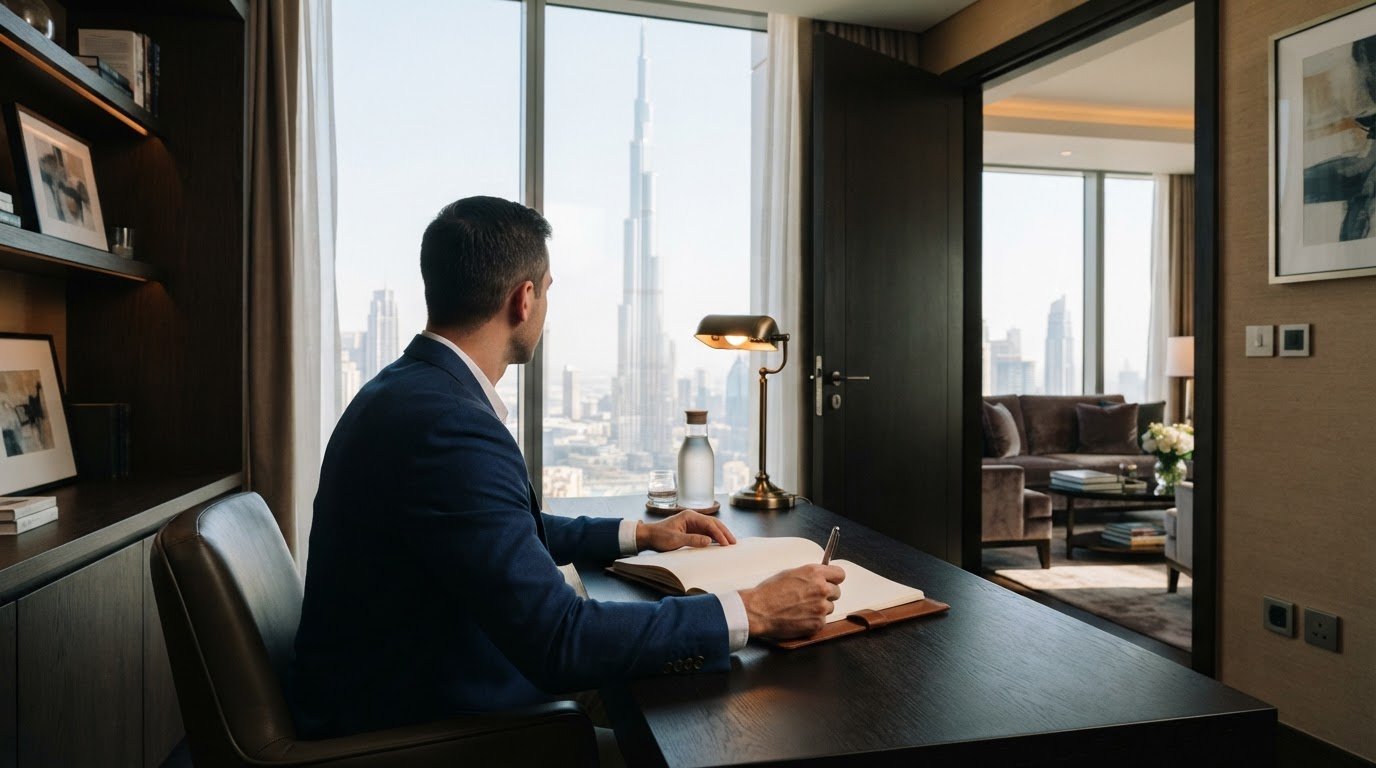
A private office suite doesn’t automatically require a long booking. There’s no single minimum rental period for hotel suites with private office space: terms depend on the property and stay type. Some options suit a brief work visit, while others work better for longer stays.
It’s reasonable to want a quiet, well-appointed place to work without booking accommodation longer than necessary. First, distinguish a business or executive suite from a standard guest room, then match the booking period to your schedule and the property’s terms.
This guide explains common business suite categories, how work-focused hotel stays can vary by destination, and what to know about minimum rental periods. It also compares short-term and long-stay accommodation, helping you choose a setting that supports both your work and your time away from the desk.
Key Takeaways
- Learn what distinguishes executive and business suites from other room categories, and which features matter for focused work.
- Understand how suite layouts can vary, including the difference between a spacious living area and a genuinely separate office.
- Explore how work-from-hotel arrangements differ across international markets and what to consider when planning a stay.
- Find out how to assess U.S. hotel suites for private office space and choose a rental period that suits your plans.
Executive and business suites
Hotels may use terms such as executive suite, business suite, and work-friendly room differently. Look for a specifically described office or work area: the suite label alone doesn’t guarantee dedicated workspace. A desk in the bedroom, for instance, offers less separation than an enclosed office. The layout is specific to each property, not something you can assume from the hotel chain’s name.
A hotel suite can offer a private place to work alongside overnight accommodation, while coworking spaces generally provide shared professional facilities. A business hotel may also offer work-related amenities beyond the room. Choose a suite when privacy and accommodation matter together; choose a shared workspace when access to common work facilities is the priority. Both can support a laptop-based workday, but they serve different needs.
There’s no universal office-use fee or restriction for hotel suites. The property’s booking terms explain what the room rate includes and whether services such as printing or meeting-room use have separate conditions. A private desk is part of the room’s layout; a bookable meeting room is a separate facility. The office label alone doesn’t promise access to every business service.
Features in a private work area can include a desk, chair, lighting, and storage, but layouts differ. Some suites place the desk in an open living area; others provide a separate room. The distinction affects whether work can remain visually separate from rest or meetings. A queen bed measures 60 x 80 inches, while a king bed measures 76 x 80 inches, details that illustrate how sleeping space and office space compete for room.
High-speed Wi-Fi, printers, and meeting space aren’t automatic features of every suite. Hotels define amenities individually, so a desk doesn’t imply printer access or a conference room. For video calls, prioritize a distinct work area and reliable in-room internet. If your work involves documents, check for printing facilities; for client discussions, consider whether a separate meeting space suits your needs.
Hotel suite categories
To distinguish an office from a desk, look for a separate room or enclosed workspace in the suite layout. In hotel suites with private office space, the office should be a distinct area, not simply a desk beside the bed or against a living-room wall. A floor plan showing a door between the bedroom and study, for example, indicates more separation than a photograph of a desk in an open room. The suite name alone doesn’t establish the layout.
Hotels use suite categories differently, so a label suggests possibilities rather than a standard floor plan. A studio suite may combine sleeping, sitting, and working areas in one open space. A one-bedroom suite separates the bedroom from a living area, but that area may have only a desk. An executive suite may emphasize workspace, while a penthouse or presidential suite signals an upscale category, not necessarily an enclosed office. Read the room details to understand the layout.
There’s no dependable U.S. city ranking for the most hotel suites with private office space based on category names alone. Hotels classify rooms differently, and city population doesn’t reveal how many rooms have enclosed workspaces. Toledo, Ohio, has approximately 270,000 residents, while its metropolitan area has approximately 650,000. Those population figures don’t establish how many local hotel suites include a separate office.
Use three steps to compare categories:
- Find the layout: Look for a floor plan or description naming a separate office, study, or enclosed workspace.
- Read the wording: Distinguish a named room from a general “work area” or “desk” description.
- Match it to your work: A desk may suit solo laptop tasks, while an enclosed office offers more separation for calls.
A suite category is a starting point, not a substitute for checking the floor plan. Before choosing a room, confirm that the described space suits your needs for focused work, calls, and privacy.
Work-from-hotel offerings in international markets
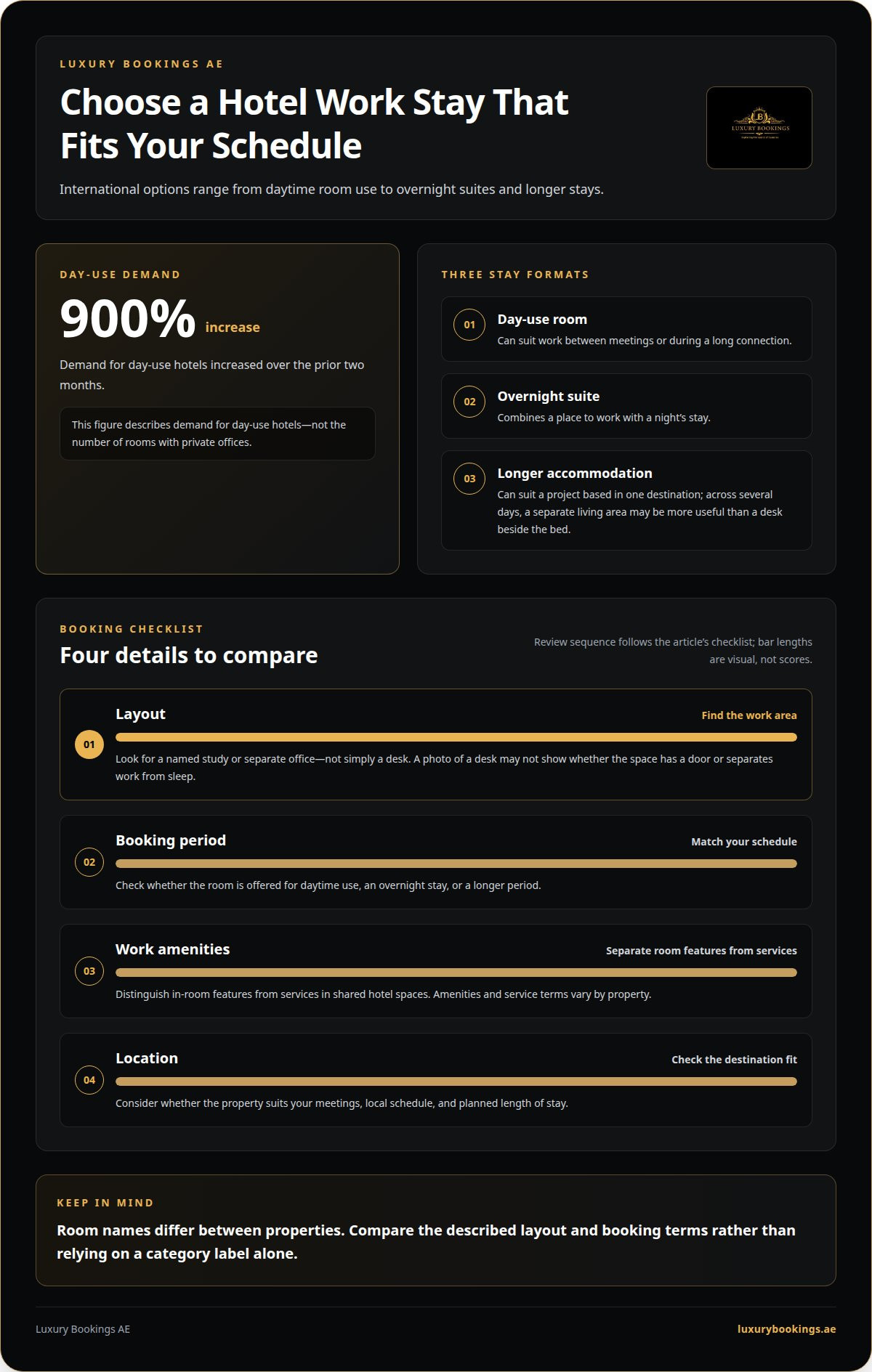
International work-from-hotel stays range from day-use rooms to overnight suites and longer accommodation. The format affects whether you have a room for focused work, overnight rest, or both. Demand for day-use hotels increased by 900% over the prior two months, reflecting interest in booking rooms for shorter work periods. That figure describes day-use demand, not the number of rooms with private offices.
Property descriptions use different terms for similar layouts. One hotel may call a room an executive suite; another may describe a study, work area, or separate living room. Compare the room layout instead of relying on its category name. A photograph of a desk doesn’t show whether the workspace has a door or is separated from the sleeping area.
For an international booking, match the room format to your schedule. A day-use room can suit work between meetings or during a long connection. An overnight suite combines work with a night’s stay, while longer accommodation can suit a project based in one destination. If you’re working across several days, for example, a separate living area may be more useful than a desk beside the bed.
Before choosing, review four details in the property’s room description and booking terms:
- Layout: Look for a named study or separate office, not simply a desk.
- Booking period: Identify whether the room is offered for daytime use, overnight stays, or longer periods.
- Work amenities: Distinguish in-room features from services in shared hotel spaces.
- Location: Consider whether the property suits your meetings, local schedule, and planned length of stay.
These distinctions help you compare options across destinations without assuming every hotel uses the same labels. A suite with a private office can suit focused work and overnight comfort; a day-use room may better fit a shorter work window. Choose based on how long you need the room and whether the workspace must be separate from your living area.
Which hotels offer suites with a separate private office in the United States?
There’s no reliable city ranking showing which U.S. hotels have the most suites with enclosed offices. Room names and layouts vary by property, so a chain-wide label may not describe every location. Start with the specific hotel and room category, then look for terms such as “separate study,” “private office,” or “enclosed workspace.” A listing that mentions only a desk describes a work surface, not necessarily a separate room.
Use the property’s room details to tell a dedicated office from a general suite. A floor plan showing a door between the office and bedroom is more informative than a photograph of a desk. One executive suite might have a desk in its sitting area, while another property’s suite has a distinct study. The layout, not the category name, shows how work and rest are separated.
Assess each candidate with three practical steps:
- Search the room description: Note whether it names a separate office, study, or enclosed workspace.
- Review the floor plan: Look for a room boundary or door separating the workspace from the bedroom.
- Match the layout to your tasks: A private room may suit confidential calls, while an open desk may serve routine laptop work.
Location alone cannot establish office-suite availability. Toledo, Ohio, illustrates why population figures don’t answer the room question: a city’s size says nothing about how individual hotels configure their suites. Instead, compare properties in the destination you need and use each room’s published layout. For a U.S. trip that also requires a refined stay, explore hotel stays for your travel plans. Focus on the specific suite description, since an executive or business label can cover different arrangements across properties.
City size alone can’t tell you how many suites have private offices; availability depends on each property’s room configuration.
Luxury Bookings AE: Penthouse & Presidential Suites
Luxury Bookings AE offers Penthouse & Presidential Suites and hotel rooms for short-term and long-term stays. These options let you match your accommodation’s style and duration to your trip. If a separate office is essential, check the specific room layout to distinguish an enclosed workspace from a desk within the suite.
For travel beyond one city, Hotels worldwide and Luxury Villa Rentals offer additional accommodation categories to consider. Choose based on your destination, length of stay, and whether you prioritize a private work area or a more expansive setting. Explore Luxury Bookings AE’s accommodation options for your trip.
Plan a Stay Around the Way You Work
Before choosing a room, decide what you need for a productive stay: a door between work and rest, a quiet place for calls, or simply a desk for occasional tasks. Then consider how long you’ll stay and what kind of accommodation suits that schedule. These priorities make it easier to assess hotel suites with private office space without relying on suite labels alone.
For a stay in a more elevated setting, Luxury Bookings AE offers Penthouse & Presidential Suites and Luxury Villa Rentals. Choose accommodation based on your destination, schedule, and preferred surroundings. A work-focused trip may call for a different setting from a leisure stay, even when both require room to settle in.
Contact Luxury Bookings AE for help exploring accommodation for your plans. Your next stay can bring work and comfort together with greater intention.
Frequently Asked Questions
Is there a minimum rental period?
There’s no single minimum rental period for every hotel suite. Day-use bookings, overnight reservations, and extended stays are different formats, with terms set by each property. Someone needing a room between meetings, for example, would look for a daytime option; a traveler working across several days would choose overnight accommodation. The property’s terms determine the booking period.
Are hotel office suites available for long-term stays or extended stays?
Yes. Hotel rooms and long-stay accommodation are available for extended stays through Luxury Bookings AE’s worldwide accommodation options. A longer reservation can suit a temporary work assignment or a project based in another city. Stay length and room category are separate considerations: an extended booking doesn’t mean the room has a dedicated office, so match the layout to your work needs.