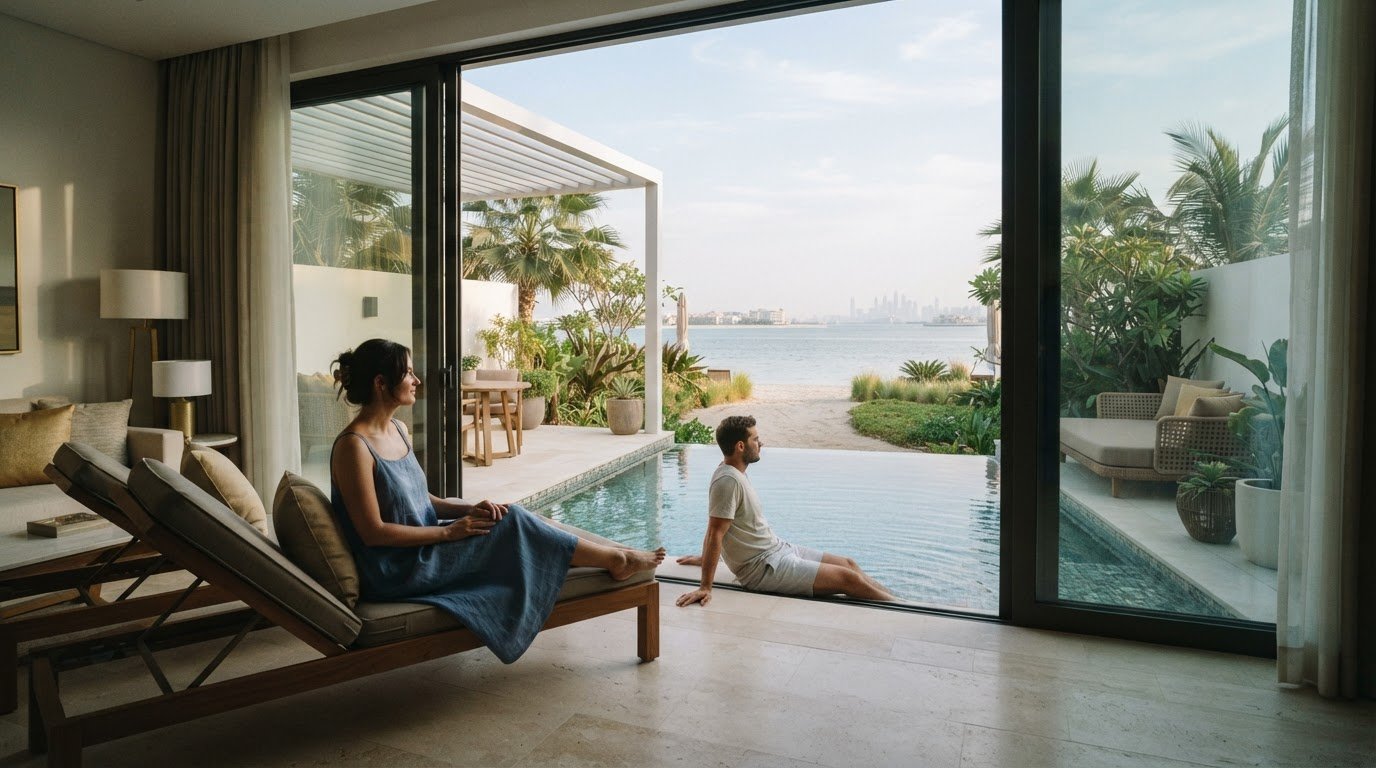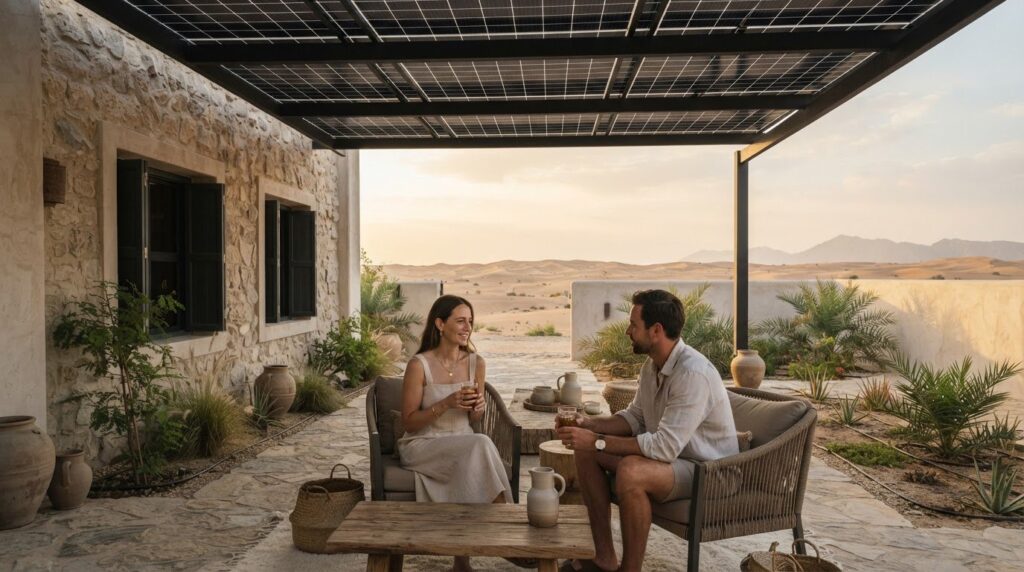
Sustainable luxury hotels and resorts pair refined stays with choices intended to reduce pressure on the places guests visit. Their approach may include energy-conscious buildings, water-saving systems, waste reduction, and stronger ties to local communities. For travelers, comfort can go hand in hand with a more considered experience of a destination.
A beautiful room and attentive service still matter; so does understanding how a property relates to its landscape and community. Location, natural surroundings and the details of a hotel’s daily operations all help shape a more responsible stay. This guide explores why sustainable getaways are worth considering, how thoughtful design can reduce environmental impact, and what to look for when choosing a hotel. From secluded island retreats to distinctive city properties and nature-led escapes around the world, discover examples of eco-conscious hospitality that feels both purposeful and indulgent.
Key Takeaways
- Look beyond a hotel’s aesthetic: its setting, materials and relationship with local communities can shape a more thoughtful stay.
- Learn how energy, water and waste practices can reduce a property’s environmental footprint and benefit its destination.
- Recognize design choices that can make a hotel more efficient while preserving comfort and a strong sense of place.
- Explore distinctive eco-conscious stays around the world, then consider the accommodation style and location that best suit your getaway.
1. Why Stay at a Sustainable Boutique & Luxury Hotel?
A sustainable stay can combine refined comfort with care for its setting. Architecture that follows the landscape may reduce energy needs while preserving the character of a place. Locally sourced stone, timber, and other building materials can also reduce transport-related impact. In forest or coastal destinations, thoughtful building placement can help protect nearby habitats and preserve a sense of place.
Community partnerships make that commitment tangible. In Monterey Bay, The Sanctuary Beach Resort works with Kind Traveler to benefit Rancho Cielo, a nonprofit offering culinary training to underserved youth. Annapolis Waterfront Hotel partners with the Live Water Foundation and Oyster Recovery Partnership to support oyster restoration in Chesapeake Bay. These examples show how a stay can direct attention and support toward local priorities.
Look beyond a sustainability statement. A hotel’s community programs, local employment, and relationships with artisans can show how it contributes to the destination. Locally commissioned furnishings and crafts, for example, bring skilled makers into the guest experience. Regional building materials can preserve familiar traditions while giving rooms a distinct connection to their surroundings.
How much do sustainable luxury hotels cost per night? A nightly rate depends on destination, room category, season, and included services; the price is determined after a quote request. These factors shape the stay’s overall value, from its setting and design to dining and guest experiences.
What sustainable dining and locally sourced food options do luxury resorts offer? Menus may feature seasonal ingredients from nearby farms and fisheries, including fresh, chemical-free produce. Ask what is grown or caught locally and how the menu changes with the season. This approach can support regional producers while bringing the character of the destination to the table, whether through organic produce, local seafood, or ingredients prepared by area chefs.
2. Environmental benefits for guests and destinations
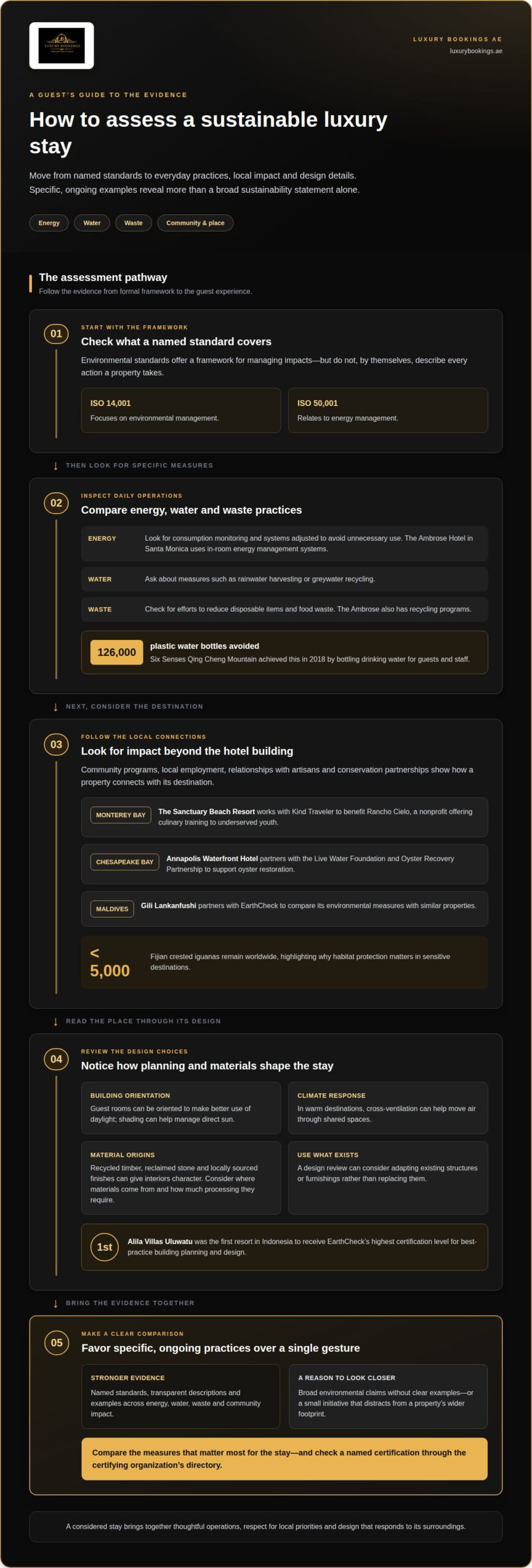
Environmental standards give guests a clearer way to understand a hotel’s practices. According to the International Organization for Standardization, ISO 14,001 focuses on environmental management, while ISO 50,001 relates to energy management. These standards provide a framework for managing impacts; they don’t, by themselves, describe every action a property takes.
Compare properties by the specific measures they describe. Energy management can include monitoring consumption and adjusting systems to avoid unnecessary use. Water practices may include rainwater harvesting or greywater recycling, while waste programs can reduce disposable items and food waste. Six Senses Qing Cheng Mountain avoided using 126,000 plastic water bottles in 2018 by bottling drinking water for guests and staff. The Ambrose Hotel in Santa Monica uses in-room energy management systems and recycling programs.
Destination benefits extend beyond a hotel’s buildings. Gili Lankanfushi in the Maldives partners with EarthCheck to compare its environmental measures with similar properties. In the South Pacific, fewer than 5,000 Fijian crested iguanas remain worldwide, underscoring why habitat protection matters in sensitive destinations. Responsible initiatives can also connect visitors with conservation, local employment, and cultural preservation, rather than treating the natural setting as scenery alone.
What makes a luxury hotel genuinely sustainable? Look for specific, ongoing practices across energy, water, waste, and community impact, rather than one isolated gesture. Greenwashing is a risk when broad environmental claims lack clear examples or a small initiative distracts from a property’s wider footprint. Named standards and transparent descriptions make claims easier to assess.
How do sustainable luxury resorts compare on energy, water, and waste practices? Their approaches vary by setting and operations: one may focus on energy controls, another on water reuse or waste reduction. To find and book certified sustainable luxury hotels, search for a named certification and use the certifying organization’s directory to identify properties. Then compare the stated measures that matter most for your stay. This helps you find a hotel whose environmental commitments align with its guest experience.
3. Eco-conscious hotel design and materials
Green building design can reduce energy use through decisions made before construction begins. A design team can orient guest rooms to make better use of daylight and plan shading to manage direct sun. In warm destinations, cross-ventilation can help move air through shared spaces. These choices make the building itself part of a more conscious approach to travel.
Alila Villas Uluwatu offers a notable example of design-led recognition. It was the first resort in Indonesia to receive EarthCheck’s highest certification level for best-practice building planning and design. That distinction highlights planning, not just decorative finishes. For guests, architecture can make conservation visible in how buildings sit within the landscape and frame views.
Material choices shape a hotel’s atmosphere and resource demands. Recycled timber, reclaimed stone, and locally sourced finishes can give interiors character while making the origins of materials part of the experience. A practical design review considers where materials come from, how much processing they require, and whether existing structures or furnishings can be adapted rather than replaced.
Low-impact accommodation also depends on the details guests encounter every day. A thoughtfully designed room can make natural light useful, provide durable furnishings, and place waste sorting where it is convenient. In shared areas, shaded outdoor dining and planted courtyards can create inviting spaces that respond to the local climate. Each feature works best when it serves guests and the building’s wider environmental aims.
When assessing a property’s design, look for evidence of deliberate decisions rather than decorative claims. Check for a named design standard, such as Alila Villas Uluwatu’s EarthCheck recognition, and details about construction, materials, and landscape planning. Those specifics help distinguish a coherent architectural approach from a few recycled accents. They also show how comfort, local character, and conservation can be considered together.
4. Luxury eco-hotel recommendations around the world
Choose a destination by the experience you want, then consider its surrounding landscape and local culture. Emirates One&Only Wolgan Valley sits within a 7,000-acre conservancy in Australia and was described as the world’s first carboNZero-certified hotel. Its setting makes conservation part of the stay, with expansive scenery shaping the experience beyond the property itself.
For an island escape, COMO Laucala Island in Fiji covers 12 square kilometres. The Brando offers another South Pacific setting on Tetiaroa, an atoll 30 miles northeast of Tahiti. Both invite travelers to consider how a resort’s location influences daily living, its relationship with nearby ecosystems, and the kind of island experiences guests can enjoy.
In England, Heckfield Place has a 438-acre estate, while Italy’s Lefay Resort & SPA Lago di Garda is integrated into 27 acres of a national park. These properties offer distinct ways to connect a refined stay with nature, from estate landscapes to protected surroundings. Their settings can guide choices for guests who value walks, views, and a slower pace.
For a more secluded stay, Mumbo Island eco hotel sits in Lake Malawi without electricity, cell service, or Wi-Fi. This experience contrasts with larger properties designed for efficient operations and extensive amenities. Decide which balance suits your trip: quiet immersion, convenient resort facilities, or a cultural itinerary shaped by the surrounding region.
Which sustainable luxury hotels use renewable energy and protect local ecosystems? The named examples with clear conservation settings include Emirates One&Only Wolgan Valley and Lefay Resort & SPA Lago di Garda; pair that shortlist with a property’s stated solar or wind practices. To explore hotel stays worldwide, consider the destination, preferred style of living, and experiences you want to bring together.
Luxury Bookings AE: Hotel Rooms on Short term and Long Term
Luxury Bookings AE helps travelers arrange short-term and long-term hotel stays, with accommodation options in destinations worldwide. After narrowing down your destination and priorities for an eco-conscious getaway, consider the type of accommodation and length of stay that best fit your plans.
Luxury Bookings AE offers hotel stays for both shorter visits and longer arrangements. Travelers seeking more private space can also explore luxury villa rentals, penthouses, and presidential suites. These options suit different kinds of trips, from a focused city break to an extended stay, while keeping comfort central to the decision.
Use the design, environmental practices, and community commitments described in this guide as criteria when choosing a sustainability-focused stay. Then consider which accommodation format best fits your itinerary. Contact Luxury Bookings AE to discuss your stay.
Make Your Next Escape More Intentional
Let your environmental priorities shape your next journey. Choose a destination that appeals to you, then decide whether you want a restorative retreat, a longer stay, or a city escape. This makes it easier to seek sustainable luxury hotels and resorts that align with your pace and values, rather than judging a property by its setting alone.
Luxury Bookings AE offers accommodation options for different travel styles, including Luxury Villa Rentals and Penthouse & Presidential Suites. For a Dubai itinerary, a Desert Safari Dubai can add a distinctive experience beyond your stay. Consider your destination and accommodation preferences together, then take the next step at a pace that feels right for you.
Contact Luxury Bookings AE to plan your stay, and begin shaping a considered getaway around the experiences you value.
Frequently Asked Questions
Why Stay at a Sustainable Boutique & Luxury Hotel?
Choose a sustainable luxury property when you want a polished stay that also reflects care for its destination. A boutique hotel can offer a more place-specific experience through its architecture, activities, and connections with local makers. Before booking, decide what matters most: conservation, community involvement, or lower-impact operations. That priority gives you a practical way to assess the experience beyond room design and service.
How Does Sustainable Luxury Impact Hospitality?
Sustainable luxury encourages hotels to make environmental and community considerations part of daily operations, not just guest-facing messaging. This can shape purchasing, building management, waste handling, and guest experiences. For hospitality teams, the approach connects service quality with the character of the destination. Guests can enjoy comfort while engaging more thoughtfully with the place around them.
Which sustainable luxury hotels and resorts are highly rated in the United States?
Examples of U.S. properties with sustainability-related initiatives include The Sanctuary Beach Resort in Monterey Bay, Annapolis Waterfront Hotel, and The Ambrose Hotel in Santa Monica. Guest ratings change over time, so these examples are not a fixed ranking. Compare current reviews for service and comfort with each property’s environmental practices and community work to find a stay that suits your priorities.
What are the best sustainable luxury resorts worldwide?
The best fit depends on the setting and experience you want. Emirates One&Only Wolgan Valley offers a conservancy setting in Australia, while COMO Laucala Island provides an island escape in Fiji. Lefay Resort & SPA Lago di Garda sits within a national park in Italy. Consider the landscape, access to nature, and style of stay you prefer before choosing among these distinctive destinations.
How do luxury hotels verify sustainability claims and certifications?
Look for a named certification, the organization behind it, and a clear description of what the recognition assesses. EarthCheck, for example, is associated with Gili Lankanfushi’s comparison of environmental measures with similar properties. Read beyond the badge: specific explanations of energy, water, and waste practices help show how sustainability is integrated into operations. Community initiatives provide another perspective on a property’s stated impact.