
The best luxury stay is easier to find when you start with the trip, not the search results. Global Hotel Reservations become more straightforward when you first picture the kind of visit you’re planning: a city base for business, a peaceful retreat for a longer escape, or a distinctive setting for a special occasion.
When you’re comparing hotels around the world, polished photographs can make several options look equally appealing. To find the right fit, look beyond the images: consider the location, room arrangement, purpose and length of your stay, and the reservation terms. A clear idea of what you need helps you compare options on practical details as well as atmosphere.
This guide explains how to narrow your choices, compare key details, and prepare for a reservation. You’ll learn how to match a hotel to your plans, assess accommodation for short or long stays, and review the booking information before you commit. Luxury Bookings AE arranges high-end hotel stays worldwide, with options for short-term and long-term accommodation.
Key Takeaways
- Shape your search around the destination, dates, guests, trip purpose, and the atmosphere you want from your stay.
- Compare luxury hotels by location, room fit, service style, and stated booking terms, not star ratings alone.
- Use a five-step process to move from an initial brief to a reservation confirmation.
- Global Hotel Reservations are easier to refine when you prioritize the details that matter to your particular journey.
- Luxury Bookings AE arranges high-end hotel stays worldwide for both short and long stays.
Global Hotel Reservations: Start with the Stay You Want
A global hotel reservation arranges accommodation in your chosen destination for a set travel period. Before opening search results, decide what you need the stay to do for you. A hotel for a brief business visit may need to fit a busy schedule, while a celebratory trip or an extended stay may call for a different setting and room arrangement.
Write a short brief before comparing properties. Include the destination, dates, guest count, reason for travelling, approximate length of stay, and the atmosphere you prefer. Then rank your priorities: for example, a central location, a quieter base, more privacy, or a particular service style. A ranked list helps you compare options consistently and makes it easier to recognize a strong alternative.
Luxury means different things to different travellers. The general description of a Luxury Hotel offers context, but the practical question is whether a particular property suits your plans. A prestigious address or rating can be a useful signal, but neither tells you whether the location, room, and reservation terms match your needs.
What kind of hotel stay suits this journey?
For leisure, you may want a setting that lets you enjoy the destination at your own pace. A business trip may call for a location that works with your schedule, while a celebratory visit may put atmosphere and a sense of occasion first. For an extended stay, consider whether the room and surrounding area suit your day-to-day routine, not just your arrival and departure.
Think about who is travelling with you. A solo traveller, a couple, and a family may have different room configuration and privacy preferences. Decide what balance of personal space, service, and access to planned activities feels right. Keep your brief specific enough to rule out poor fits, but flexible enough to leave room for an appealing option you hadn’t initially considered.
When might a villa or penthouse be a better fit?
A hotel provides a defined accommodation setting with service as part of the experience. A villa may appeal if you prioritize private, residential-style space, while a penthouse offers a distinct upscale accommodation option beyond a conventional hotel room. These alternatives may suit a group, a longer stay, or a trip where privacy is a leading priority.
Choose according to the needs of the trip, rather than prestige alone. If Dubai is part of your plans and a private residential-style setting appeals, explore the Dubai luxury villa rentals guide for a closer look at this accommodation option.
With a starting brief in place, Global Hotel Reservations become a more considered process. You can assess each stay against the experience you want instead of browsing without a clear point of reference.
Plan Global Hotel Reservations Around Destination, Guests, and Dates
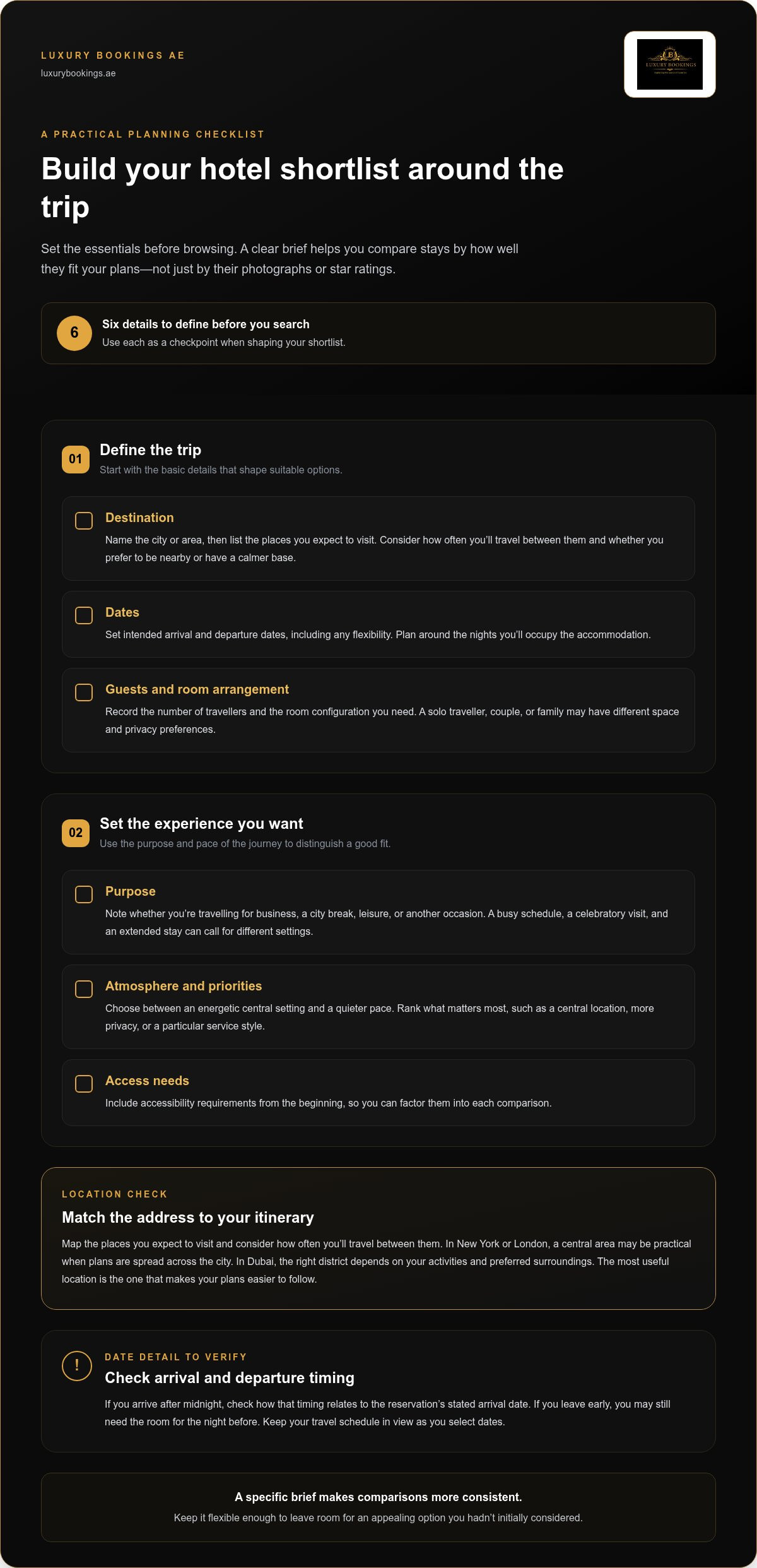
A focused plan turns a broad destination search into a useful shortlist. Before browsing, note where you’re going, when you plan to stay, who’s travelling, what the trip is for, and the atmosphere you want from your accommodation. These details help you distinguish a convenient city base from a quieter retreat, and a short visit from a longer stay.
- Destination: Name the city or area, then list the places you expect to visit.
- Dates: Set your intended arrival and departure dates, including any flexibility.
- Guests: Record the number of travellers and the room configuration you need.
- Purpose: Note whether you’re travelling for business, a city break, leisure, or another occasion.
- Atmosphere: Decide whether you prefer an energetic central setting or a quieter pace.
- Access needs: Include accessibility requirements from the beginning, so you can factor them into each comparison.
Match the destination to the rhythm of the trip
Choose a location that supports how you plan to spend your time. In New York or London, a central area may be practical if your meetings, cultural visits, or dining plans are spread across the city. In Dubai, the right district depends on the activities and surroundings you have in mind. A quieter, resort-style setting can suit a slower leisure itinerary, while a central address may shorten journeys between planned stops.
Map the places you expect to visit and consider how often you’ll travel between them. Think about whether you want to be near a particular area or prefer a calmer base. The most useful location isn’t necessarily the busiest one. It’s the one that makes your plans easier to follow.
Set dates and guest requirements before browsing
Set your intended dates and guest count before comparing properties. Decide what room configuration will work for your party and note any accessibility needs. These details help you identify genuinely suitable options and prevent a property from making your shortlist when it doesn’t meet your basic requirements.
Arrival and departure times can affect the nights you need to reserve. If you arrive after midnight, check how that timing relates to the reservation’s stated arrival date. If you leave early, you may still need the room for the night before. Plan around the nights you’ll occupy the accommodation and keep your travel schedule in view as you select dates.
With these details settled, Global Hotel Reservations are easier to shape around your destination and travelling party. Explore luxury accommodation in destinations worldwide with Luxury Bookings AE.
Compare Luxury Hotel Reservations Beyond Star Ratings
A star rating offers a broad point of reference, but it can’t show whether a property suits your itinerary, guest needs, or preferred pace. Compare the practical details alongside the experience you want. Use the same criteria for each option, and separate information the property states from wording that simply conveys a mood.
| Comparison point | What to assess |
|---|---|
| Location | How well the setting connects with planned activities and daily routines. |
| Room fit | Whether the stated room configuration suits the guest count, bed needs, and privacy preferences. |
| Stay duration | Whether the accommodation is a practical fit for a short visit or an extended stay. |
| Service style | What the property explicitly describes about the service experience, and whether it matches your expectations. |
| Booking terms | The stated cancellation, payment, and change conditions for the specific reservation. |
Compare like with like. A hotel that suits a short city visit may be less appropriate for a longer stay if the room description doesn’t match your needs. A location may sound appealing on its own, but prove less convenient when you compare it with the places you plan to visit each day.
Which hotel details matter most in a shortlist?
Start with location. Consider the routes between the property and your planned activities instead of relying on a broad label such as “central.” Next, read the room descriptions closely. Check the stated layout and bed arrangement against your guest count and privacy preferences. Finally, separate clear details from promotional language. Words that suggest elegance may set a tone, but they don’t replace specific information about the room or stay.
For each option, note what is stated and what remains unclear. This prevents assumptions from becoming deciding factors. Give essential details appropriate weight in your shortlist, rather than using a star rating as a substitute for information about your needs.
How do booking terms affect the decision?
Read the terms attached to the specific reservation before completing it. Compare the cancellation deadline, payment schedule, and rules for changing dates or guest details. Conditions can vary by property, rate, and reservation, so don’t assume that a policy you saw elsewhere applies. Treat the written terms as part of the stay you’re choosing, not as fine print to leave until later.
Apply the same care to inclusions. Count a service or feature as part of the reservation only when it’s explicitly stated for that stay. This approach makes Global Hotel Reservations easier to compare on the details that matter to your journey.
Make a Global Hotel Reservation in Five Clear Steps
A clear sequence helps turn a shortlist into a reservation you can prepare for. Keep your trip priorities in view at each step, so the stay you select and the details you submit remain aligned.
- Define the brief. Record your destination, intended dates, guest count, trip purpose, and preferred atmosphere. Add the room configuration and any accessibility needs that matter. Use this brief as a reference for each decision.
- Shortlist suitable stays. Focus on properties that fit your preferred location, room needs, and length of stay. Compare a manageable group rather than trying to assess every hotel in a destination. Destination-specific explorations, such as this Langham New York hotel case study, can also offer context for considering a property in its setting.
- Compare the terms. Read the cancellation, payment, and change conditions attached to the reservation. Review stated inclusions and room details. Terms may differ by property, rate, and reservation, so assess the specific conditions rather than relying on assumptions.
- Submit accurate details. Enter the lead guest’s name, dates, guest count, and selected room information carefully. Add arrival timing or special requirements in the appropriate place if requested. Check spelling and dates before submitting.
- Review the confirmation. When you receive the reservation confirmation, compare it with your request. Check the property name, dates, room selection, guest details, and stated terms, then keep the confirmation accessible for your journey.
Prepare the details needed for a reservation
Have the lead guest’s name, intended arrival and departure dates, number of guests, and room preferences ready. Confirm that names are spelled correctly and dates reflect the nights you plan to stay. If the reservation process asks about arrival timing or special requirements, provide clear, relevant details. This makes it easier to compare the confirmation with your plans.
Review the confirmation and prepare for arrival
Read the confirmation carefully. Match the property, dates, room details, and terms against the reservation you intended to make. Note any stated arrival instructions, and keep the confirmation available while travelling. If your plans change, follow the process and conditions stated for that reservation rather than assuming a universal change policy applies.
Careful checks help you move from choosing a stay to preparing for it. For Global Hotel Reservations shaped around your travel plans, explore luxury hotel stays worldwide with Luxury Bookings AE.
Reserve Worldwide Luxury Hotel Stays with Luxury Bookings AE
Choosing a hotel in another country can involve more than selecting a destination and dates. You may be weighing the character of the setting, the needs of your guests, the purpose of the trip, and how long you’ll stay. Luxury Bookings AE arranges high-end hotel stays worldwide, with options for both short-term and long-term accommodation.
Our luxury-first focus keeps your search centred on high-end stays. A brief leisure visit, a business journey, and an extended stay each bring different priorities. Your location, room preferences, and preferred atmosphere can guide the kind of accommodation you explore. Then, use the stated details of each option to make a considered decision.
Who may value a luxury-first booking approach?
Leisure travellers may want a setting that complements the destination and the pace of their plans. Business guests may give greater weight to a location that fits their schedule. For a longer stay, consider the duration and day-to-day suitability of the accommodation instead of treating an extended visit like a short stopover.
A luxury-first approach can help you weigh accommodation quality alongside practical details. Start by identifying what matters, compare relevant stays, and review the stated terms before moving ahead. The goal is to narrow the possibilities around the experience you want, not simply to collect options.
Luxury Bookings AE arranges high-end hotel stays worldwide for journeys of different lengths. Keep the trip’s purpose and guest requirements in view as you explore, so your shortlist stays focused on options that match your preferences.
Choose the next step for your stay
Begin with four essentials: destination, dates, guest needs, and preferred accommodation style. Add the purpose of your visit and whether you’re planning a short or long stay. These details help you compare locations and room descriptions against what your journey requires.
Keep your priorities close as you explore. The right fit for a business visit may differ from a leisurely escape or a longer stay. Focus on the details that matter to you, read the reservation terms, and give yourself time to build a considered shortlist.
For your next journey, explore luxury hotel reservations worldwide with Luxury Bookings AE and find a high-end stay suited to your plans.
Let Your Next Stay Set the Tone
A memorable journey begins before arrival. Your accommodation can shape the pace of your days and the way you experience a destination. Let that possibility guide your decision. Rather than searching for a perfect stay in the abstract, choose the option that fits the experience you want.
Thoughtful Global Hotel Reservations are about making an informed choice, not collecting endless options. Trust the priorities you’ve set, review the written details carefully, and look forward to the experience ahead.
When you’re ready to take the next step, discover luxury hotel stays worldwide with Luxury Bookings AE. Choose a considered stay that helps set the tone for your next destination.
Frequently Asked Questions
How far in advance should I make global hotel reservations?
Start your search earlier when your dates coincide with a busy travel period, a major event, or a special occasion. The destination and your room requirements matter too: a specific room configuration may narrow your options. If your dates are flexible, compare stays across your possible travel window. Before booking, read the terms for the specific reservation, since cancellation conditions can differ.
Can I make a hotel reservation for someone else?
The person arranging a stay may be able to enter another traveller as the lead guest, depending on the instructions for that reservation. Use the guest’s name as requested and share the confirmation details with them. For example, if you’re arranging a stay for a colleague, make sure the reservation uses the traveller’s details and review any stated payment or identification instructions.
What happens if I arrive late at a hotel?
Late-arrival procedures depend on the property and reservation terms. Review the confirmation for stated check-in hours and arrival instructions before travelling. If a delay or schedule change affects your estimated arrival, use the contact or update method specified in the reservation to share the revised timing. Don’t assume the property will know you’re delayed or that every hotel handles late arrivals in the same way.
Is a hotel reservation confirmed immediately after I submit my details?
Confirmation depends on the booking route and reservation. Look for written confirmation that identifies the property, stay dates, guest, and room or accommodation details. If the booking page describes your request as pending, wait for the stated confirmation before treating the stay as finalized. Save the confirmation somewhere accessible while travelling, and use it as your reference if you need to review the reservation.
Can I change or cancel a global hotel reservation?
That depends on the terms attached to your specific reservation. Before submitting, check the cancellation deadline, any stated fees, and the process for requesting a change. A different rate or property may have different conditions, so don’t rely on a policy from another booking. If your plans change, refer to the confirmation and follow its instructions, keeping any updated reservation details with your travel documents.
What information do I need for an international hotel reservation?
Have the lead guest’s name, destination, dates, guest count, and room preferences ready. Depending on the property and destination, the reservation process may request additional information. Enter details carefully, especially names and dates, and submit personal information only through the process provided for the booking. Before finalizing, compare the entered details with your travel plans to avoid a spelling or date error.
Can I reserve multiple hotel rooms in one booking?
Some booking processes allow multiple rooms in one reservation, while others handle each room separately. The process may depend on the property, dates, room types, and how guests are assigned. Before submitting, make a simple room-by-room plan showing who will stay where and noting any different room preferences. Then check that the reservation reflects the intended room count and guest allocation rather than assuming one booking covers everyone correctly.