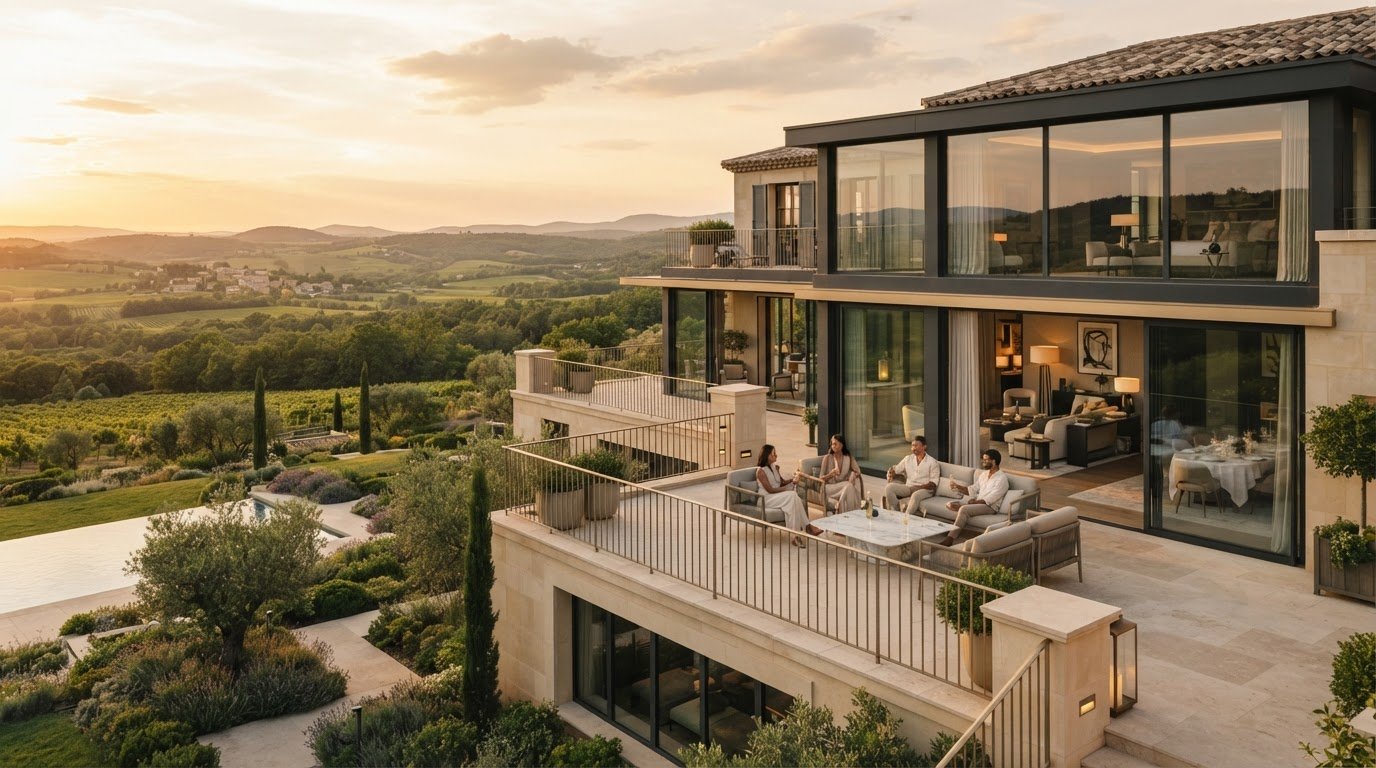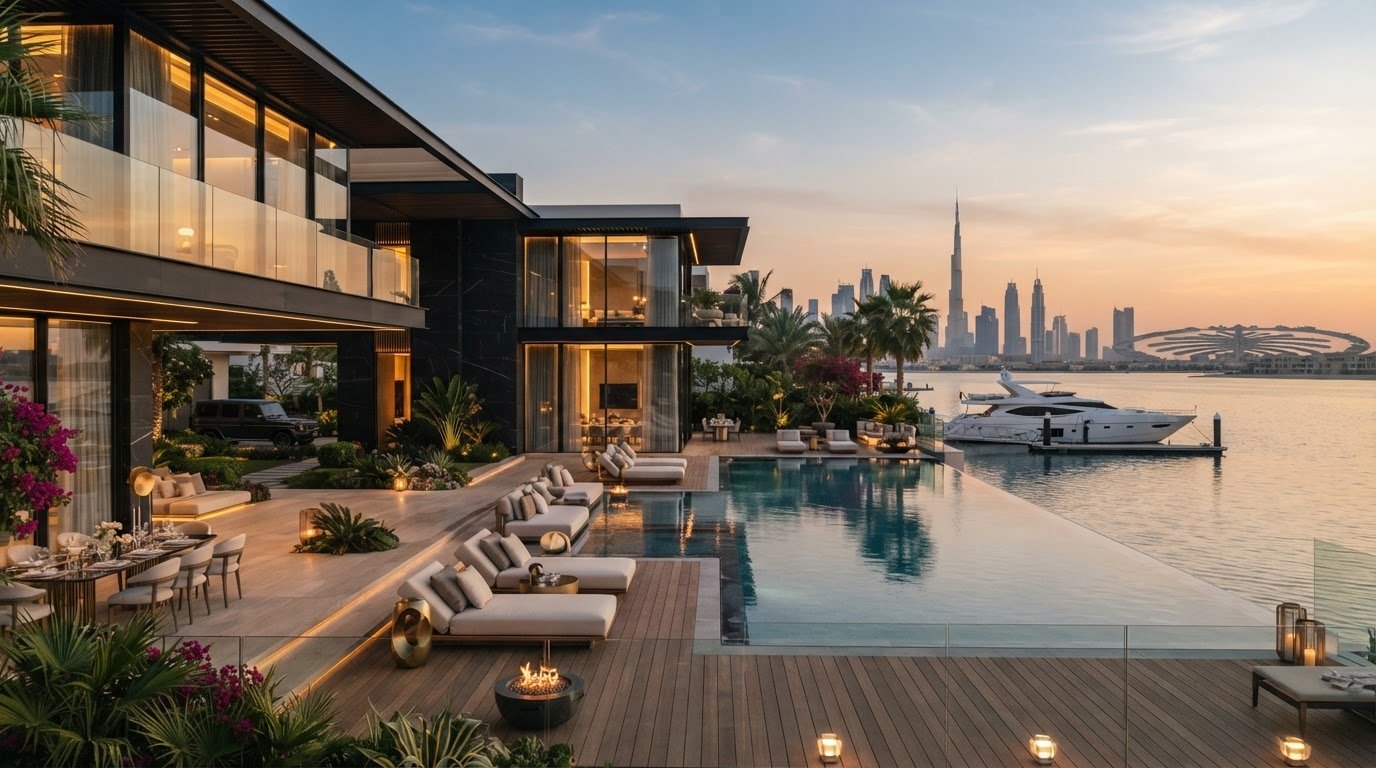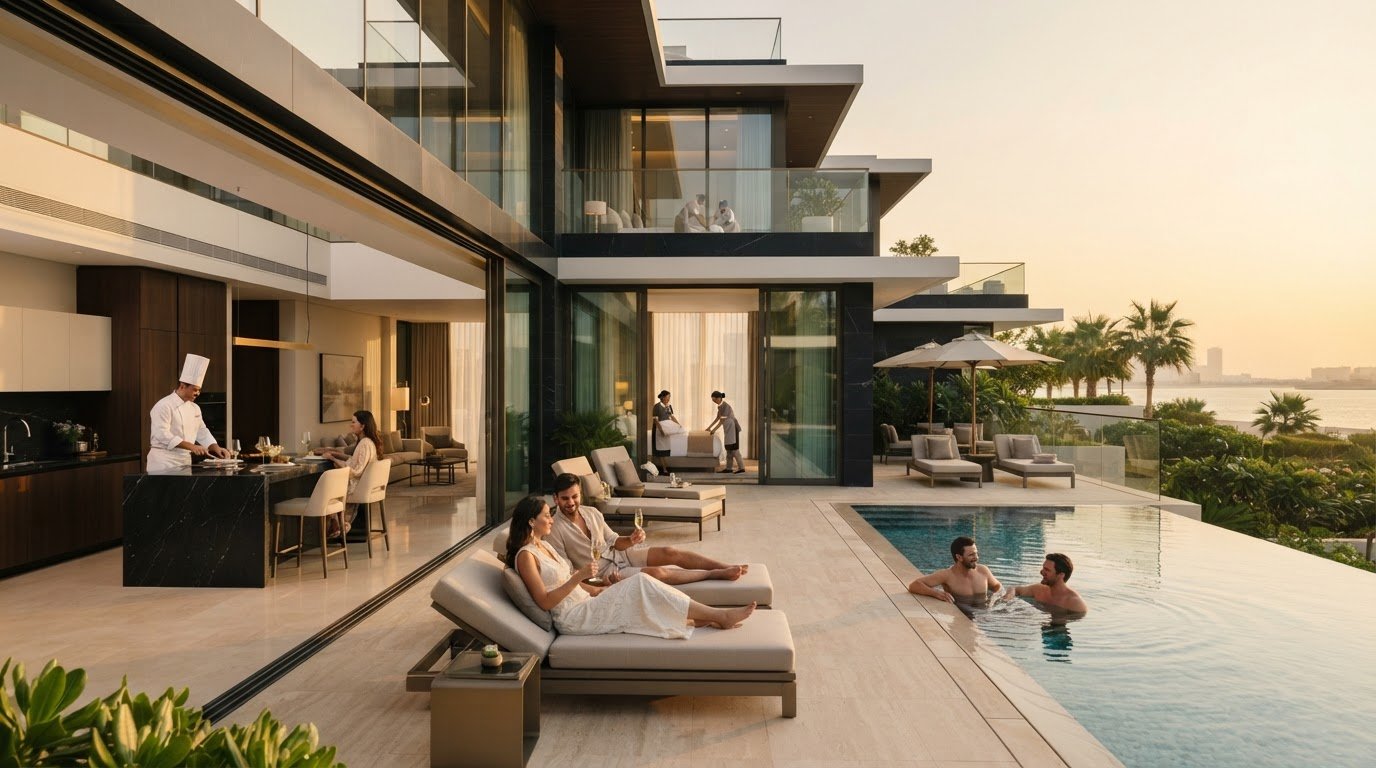
What makes a countryside stay feel truly luxurious: grand interiors, or privacy, setting and thoughtful details that suit your group? When comparing countryside luxury estates for rent, polished photography can make very different properties look equally appealing. Practical differences, however, shape the experience once you arrive.
Choosing well means looking beyond the first impression. You might want quiet seclusion for a restorative escape, generous shared spaces for a family gathering, or convenient access to nearby villages and experiences. The right balance depends on your occasion, your guests and how you want to spend your days.
This 2026 guide explains how to compare locations, property features, privacy and practical details before creating a shortlist. You’ll learn how to identify the features that matter most to your group, weigh peaceful surroundings against ease of access, and choose a stay that feels considered rather than complicated. With clear criteria in hand, you can explore premium accommodation options with greater confidence.
Key Takeaways
- Assess countryside luxury estates for rent by their setting and sense of privacy, not just their polished photography.
- Match sleeping arrangements and shared spaces to your group so the property supports how you plan to spend time together.
- Compare estates, villas and hotels by privacy, service style, setting and suitability for your occasion.
- Set your destination, dates, group size and preferred pace before browsing to create a focused shortlist.
- Use your priorities for layout, privacy and trip logistics to explore premium accommodation options across destinations.
Why choose countryside luxury estates for rent over a conventional stay?
A countryside luxury estate is a private, high-end stay in a rural setting, where the landscape is part of the experience. Instead of returning to a busy hotel after a day out, guests can enjoy a quieter base with space to gather, unwind and settle into a slower rhythm. The appeal is not simply grandeur. It is the combination of privacy, space and a distinctive sense of place.
For some travellers, that means waking to open views and planning an unhurried day. For others, it means sharing meals and conversation away from the pace of a public hotel setting. Estate architecture may also reflect the history and character of its region. England’s country houses, for example, have evolved across centuries as residences and expressions of changing architectural styles, as outlined in the English Country House overview.
Neither format is automatically better. A hotel may suit guests who value a familiar, service-led environment, while an estate may appeal to those seeking a more private stay shaped around their group. Compare each property’s setting and stated arrangements rather than assuming every estate includes the same facilities or service.
What distinguishes an estate stay from a country hotel?
Privacy and context are the main distinctions. An estate stay generally offers a private base in a rural landscape; a country hotel places guests in a hotel-led setting, where service and shared spaces are part of the experience. These are useful starting points, not guarantees about an individual property. Consider how much independence your group wants, which service style suits you, and whether the stated arrangements fit your plans.
Which occasions suit a countryside estate?
A private celebration may call for a setting where guests can spend time together at a comfortable pace. For a restorative break, a quieter location and a stay with room for rest may matter more. On an extended family visit, the layout and shared spaces can determine whether everyone has a natural place to gather or retreat. In each case, compare the property’s arrangements with the needs of your occasion.
Couples may appreciate the seclusion for a special escape, while families and private groups may value time together away from crowded public areas. Before choosing, picture an ordinary day at the estate: where people will spend time together, how much privacy they want, and whether the pace suits the reason for travelling. This can help you decide whether countryside luxury estates for rent are the right format, or whether a hotel’s more structured environment would feel more natural.
Which estate features matter most when comparing countryside luxury rentals?
A striking photograph can establish the mood, but it rarely shows how a stay will work for your group. Compare written property details with the images. Look for the stated room configuration, shared spaces, setting and amenities that matter to your plans. Notice what the description makes clear and what is difficult to picture. A beautiful exterior, for example, does not show whether there is enough room for everyone to gather or find a quiet corner.
Think about the rhythm of an ordinary day, not just your arrival. Will guests eat together, spend time indoors or use outdoor areas? A generous sitting room may matter more to a group hoping to linger over conversation than an impressive entrance. For families, the number and arrangement of sleeping spaces can shape comfort; couples may put more weight on privacy and the surrounding landscape. Evaluate each feature as specific to that property, not as an assumed standard of countryside luxury estates for rent.
How should group size and layout shape your shortlist?
Start with the number of guests, their sleeping needs and the group’s daily routine. Consider whether guests will gather for meals, share quiet evenings or need separate spaces to unwind. Then compare those needs with the stated room configuration and capacity. A maximum guest figure alone may not tell you whether the layout works for your group, so weigh the details together.
Which setting and amenities make a stay feel right?
Decide whether you value deep seclusion, proximity to nearby villages or convenient access to the wider region. Each option creates a different pace: a remote setting can encourage more time at the property, while a location closer to local destinations may make outings simpler. Compare the amenities described for each estate and consider how its outdoor space fits the way you hope to spend your days.
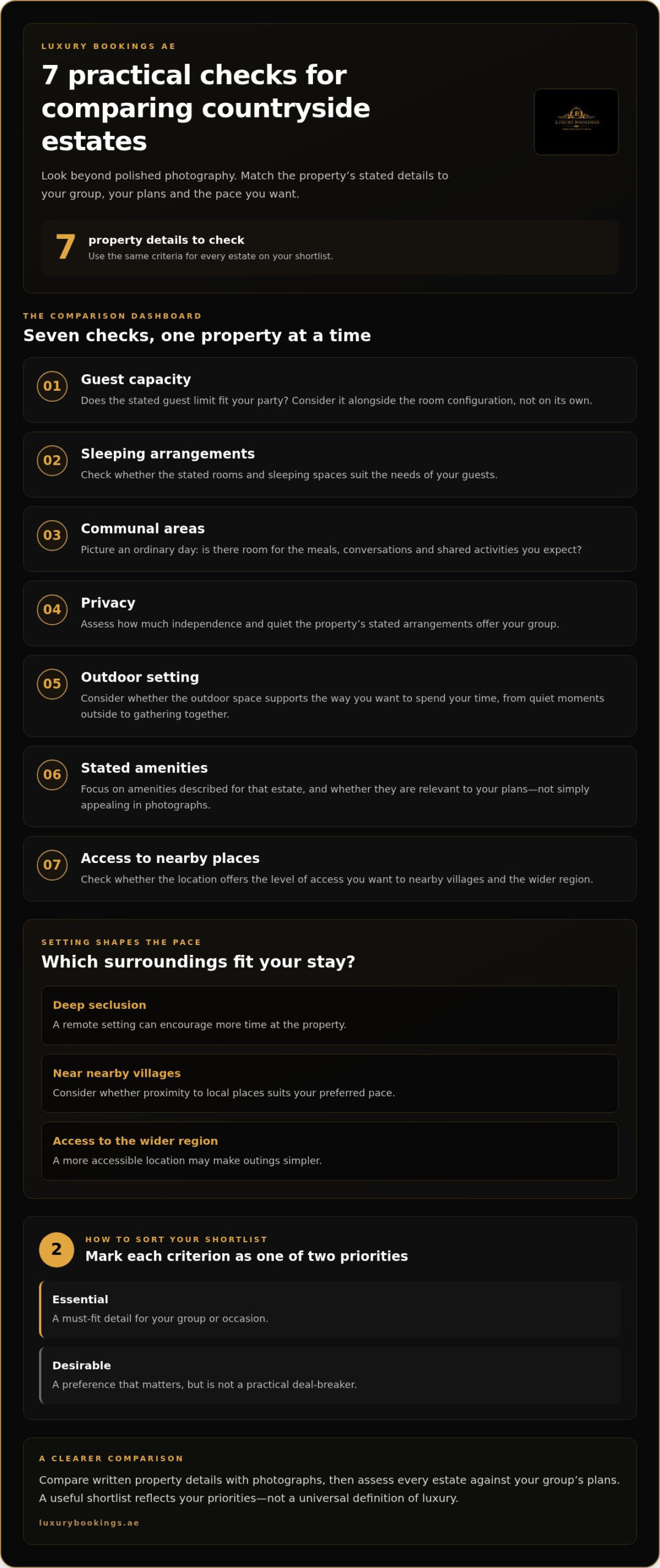
Use the same criteria for every property: guest capacity, sleeping arrangements, communal areas, privacy, outdoor setting, stated amenities and access to nearby places. Then assess each against your group’s plans.
- Capacity and rooms: Do the stated guest limit and sleeping arrangements fit your party?
- Shared spaces: Is there room for the activities you expect to enjoy together?
- Setting: Does the level of seclusion and access suit your preferred pace?
- Property details: Are the listed amenities relevant to your stay, rather than simply appealing in photographs?
Mark each criterion as essential or desirable. This keeps a polished description from outweighing a practical mismatch. If outdoor space is central to your plans, consider whether it supports the experience you want, from quiet time outside to gathering together. A useful shortlist reflects your priorities, not a universal definition of luxury.
Once your criteria are clear, explore premium accommodation options with a focused idea of the setting and layout that will suit your stay.
Countryside estate, luxury villa, or hotel: which stay fits your trip?
These accommodation types can overlap, so labels alone won’t tell you what a stay will feel like. A countryside estate is defined chiefly by its rural context and property character; a luxury villa describes a private-residence style of stay that can be found in different settings. A hotel, by contrast, is organized around a hotel-led environment. Compare the actual property, its stated arrangements and the rhythm you want for your trip.
| Stay type | Privacy | Service style | Setting | Group suitability |
|---|---|---|---|---|
| Countryside estate | Often chosen for a more private rural stay; the level depends on the property. | May feel more independent, subject to the stated arrangements. | Defined by its countryside location and individual character. | Can suit families or private groups when the layout fits their needs. |
| Luxury villa | Typically offers a private-property format, with privacy shaped by its location and layout. | Varies by property and booking arrangements. | Can be rural, coastal, or urban. | May suit couples, families, or groups, depending on capacity and configuration. |
| Hotel | Private accommodation within a shared hotel environment. | Hotel-oriented and generally more structured. | Varies by destination and property. | Can work well for travellers who prefer a more organized stay. |
The best fit depends on your priorities: choose the setting, privacy, service style and group arrangements that suit this particular trip.
When is an estate a better fit than a villa?
Choose an estate when its rural setting and property character are central to the escape, not simply because a listing uses an impressive label. Compare the stated layout and surroundings: one villa may offer a secluded countryside setting, while another may sit within a lively destination. For a destination-specific point of comparison, explore this Dubai luxury villa rental guide.
When should you consider a luxury hotel instead?
A hotel may suit travellers who prefer a more structured, hotel-oriented stay to the independence of a private property. This can be a natural fit for a shorter visit or an itinerary built around time beyond the accommodation. Consider how much you want the stay itself to shape the day: a private estate invites a different pace, while a hotel offers a setting organized around its service model.
When comparing countryside luxury estates for rent, assess each property rather than relying on category assumptions. Read the stated arrangements as carefully as the setting: the countryside can define the mood, but layout, privacy and service style determine whether the accommodation works for your group. If your priorities point to independence and a rural atmosphere, an estate may be compelling; if you prefer a more structured environment, a hotel may be the more natural choice.
How to plan and shortlist countryside luxury estates before booking
A considered shortlist begins before you open a property listing. Decide what the trip needs to feel like, then use that brief to compare countryside luxury estates for rent on equal terms. This keeps an evocative description from distracting you from practical details and helps you match the setting to the way your group will travel.
What should you decide before searching?
Agree on the destination, dates, guest count and purpose of the stay first. Separate non-negotiables, such as required sleeping arrangements or a rural setting, from preferences that would be welcome but aren’t essential. Set expectations as a group: do you want seclusion, easy access to nearby places, or to spend most of your time at the property? A shared brief makes browsing more efficient.
Follow this sequence to move from broad ideas to a booking decision:
- Define the trip. Set the destination, travel dates, number of guests, occasion and preferred pace. Consider whether the group expects restful days at the estate or regular outings nearby.
- Shortlist suitable properties. Use your essential requirements to narrow the options. Keep a property in the running only if its stated setting and arrangements appear aligned with the trip.
- Compare like for like. Review each candidate against the same criteria, including room arrangements, shared spaces, privacy, location, described amenities and booking terms.
- Arrange the stay. Once a property fits your priorities, consider the practical details that will shape the visit, from transport and meals to planned activities and arrival timing.
How can you compare shortlisted properties fairly?
Use one comparison note or table, with a column for each property and the same criteria in every row. Record what the description states about guest arrangements, included services, outdoor setting, access and terms. Keep stated facts separate from questions or assumptions. If a listing describes a peaceful setting, for example, don’t treat that alone as evidence of a particular level of seclusion or a specific service arrangement.
Read the property description and booking terms together before committing. Details about house arrangements and included services can affect how the group plans its stay; don’t infer them from photographs or from features found at another property. Make sure the itinerary suits the location, too. A schedule built around frequent outings may feel very different from a restful stay in a secluded setting.
Finally, align transport, dining plans and nearby activities with the estate’s location and your group’s preferred rhythm. Think through how guests will get to the property, whether meals will be arranged around time on-site, and which outings are practical. Exploring premium accommodation options is a natural next step once your destination and priorities are clear.
Turn your estate shortlist into a refined luxury stay with Luxury Bookings AE
A confident choice comes from matching the destination, desired privacy, property layout and trip logistics to the way your group wants to travel. With those priorities clear, you can judge whether an estate suits the occasion and plan the rest of the journey around its setting.
Luxury Bookings AE offers premium accommodation in Dubai and destinations worldwide, including luxury villas, penthouses, presidential suites and short- and long-term hotel stays. The platform can also help shape the wider travel plan: consider where you want to stay, how you’ll arrive and which experiences will complement the pace of your trip.
How to move from preferences to a considered booking
Before taking the next step, bring your shortlist down to the details that matter most. A concise brief helps keep the decision focused and the booking process considered. Include:
- Destination and dates: Define where and when you plan to travel.
- Group and occasion: Note who is travelling and what brings everyone together.
- Preferred stay style: Describe the balance you want between privacy, independence and time spent exploring.
- Property priorities: Identify the layout, setting and stated arrangements that matter most to your group.
Use these points to guide your exploration rather than treating any single feature as decisive. The right choice is the one whose stated details align with your brief and the experience you have in mind.
Plan the wider journey around your countryside stay
A rural setting can influence more than the mood of a stay. Consider the journey to the property, how your group will move around locally, and whether you plan to dine nearby, spend time on-site or take excursions. A full itinerary may suit a location with convenient regional access; a slower schedule may leave more room to enjoy the estate and its surroundings. Let the accommodation inform the rhythm rather than planning activities in isolation.
For trips that include Dubai, Luxury Bookings AE also features premium experiences such as desert safaris, helicopter tours, yacht rentals, luxury car rentals, Burj Khalifa tours and jet ski experiences. These can help shape a distinct city itinerary alongside accommodation planning. The platform’s worldwide accommodation options also let you explore premium stays across destinations as your plans take form.
With your destination, dates, group and preferred stay style in view, take the next step and Explore luxury stays and experiences.
Shape your next escape around what matters most
Memorable countryside stays often begin with a clear idea of how you want to feel while you’re away. Let that vision guide your final choice, whether you’re seeking restorative quiet, time together in a distinctive setting, or a change of pace from everyday routines. With your priorities in focus, countryside luxury estates for rent become more than beautiful properties to browse: they become possibilities for a trip shaped around your own sense of escape.
Imagine the experience beyond the stay: the arrival, the moments you’ll share and the memories you hope to bring home. Then explore options that align with your plans and preferred style of travel.
Discover premium stays and inspiration for your journey with Explore luxury stays and experiences. Start planning your escape today.
Frequently Asked Questions
What is considered a luxury countryside estate?
A luxury countryside estate is high-end rural accommodation where the property’s setting and individual character are central to the stay. The term can describe varied buildings and landscapes, so it doesn’t guarantee a particular architectural style, acreage or facility. When comparing countryside luxury estates for rent, look for details that explain what makes each stay distinctive, such as its rural context, design, privacy and stated arrangements.
How do I choose the right countryside estate for a group?
Match the property’s sleeping setup and shared areas to the way your group will use them. For example, a group with different arrival times may value a layout that gives guests room to settle independently, while a gathering built around shared meals needs suitable communal space. Consider each guest’s needs, including mobility or sleeping preferences, and compare them with the property’s stated capacity and room details.
Can a countryside estate be suitable for a multigenerational family stay?
Yes, an estate can suit several generations if its layout works for everyone travelling. Look beyond the overall guest capacity: check details such as stairs, distances between sleeping and shared areas, bathroom arrangements, and whether there are quieter spaces for rest. A property that delights one part of the family may not suit another’s daily needs, so compare the description with the group’s comfort and routines.
How far in advance should I book a countryside luxury estate?
There’s no single ideal booking window for every destination or date. For a school holiday, celebration or stay involving a larger group, start exploring once your dates are reasonably firm; a flexible trip may allow more choice later. Planning early gives you time to compare suitable options and coordinate guests. Avoid assuming a particular property will remain available until your plans are finalized.
What should I check in the booking terms before reserving an estate?
Read the terms for the payment schedule, cancellation conditions, deposit requirements, check-in and check-out times, and any stated occupancy or event rules. Confirm what the booking describes as included, such as services or access to particular areas, rather than relying on photographs or another property as a guide. Save the relevant terms with your travel notes so the group can plan with the same expectations.
Is a countryside estate or a luxury hotel better for a private getaway?
It depends on whether you prefer a private-property atmosphere or a more structured hotel setting. An estate may appeal if you want the accommodation and rural surroundings to shape the escape; a luxury hotel may suit you if you’d rather follow a hotel-oriented routine. Consider the purpose of the getaway, how much time you’ll spend at the accommodation, and what level of independence feels relaxing.
How can I plan transport and activities around a rural estate stay?
Build the itinerary around the property’s location. Before setting activity times, map the journey from your arrival point, identify nearby destinations and allow room for travel between them. Decide whether your group will need local transport throughout the stay or expects to spend most of its time at the estate. Plan meals and outings with the same geography in mind, keeping the schedule spacious enough to enjoy the rural setting.