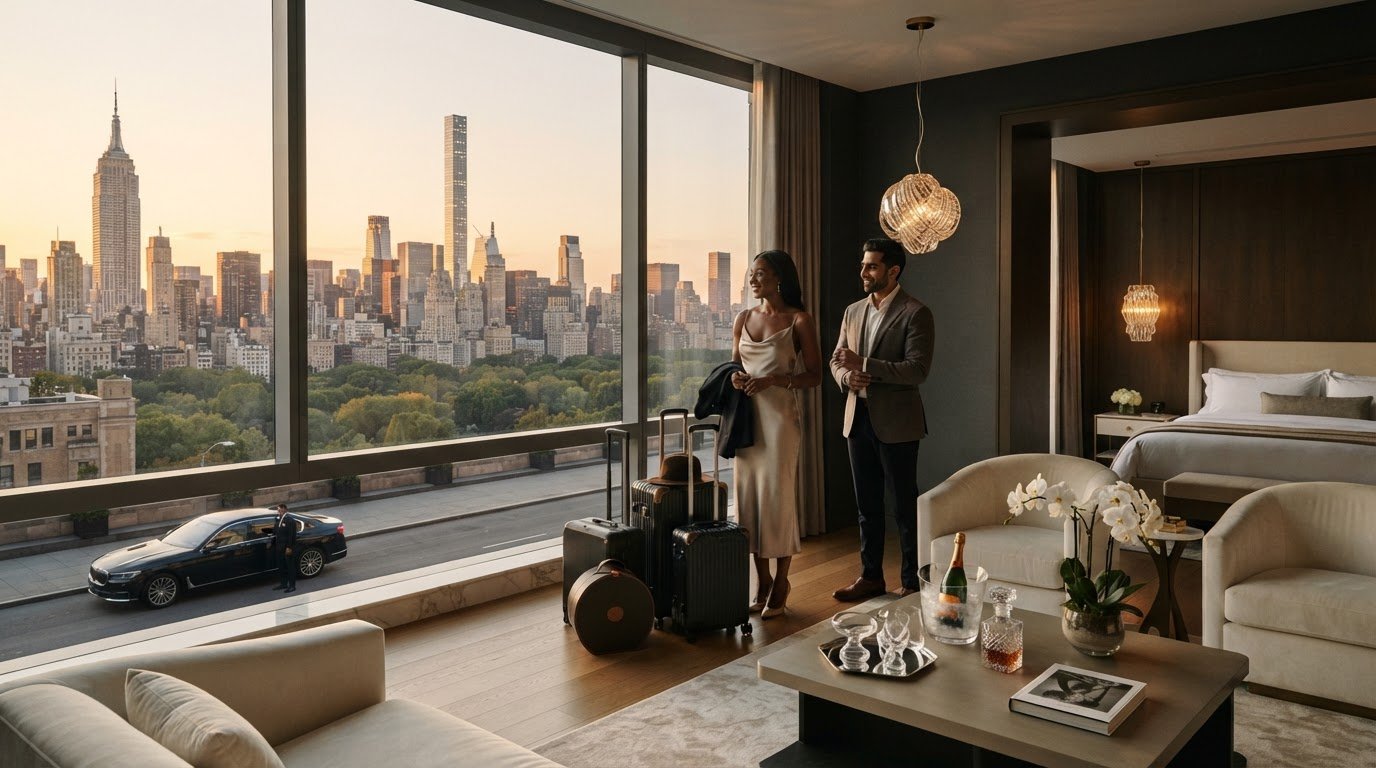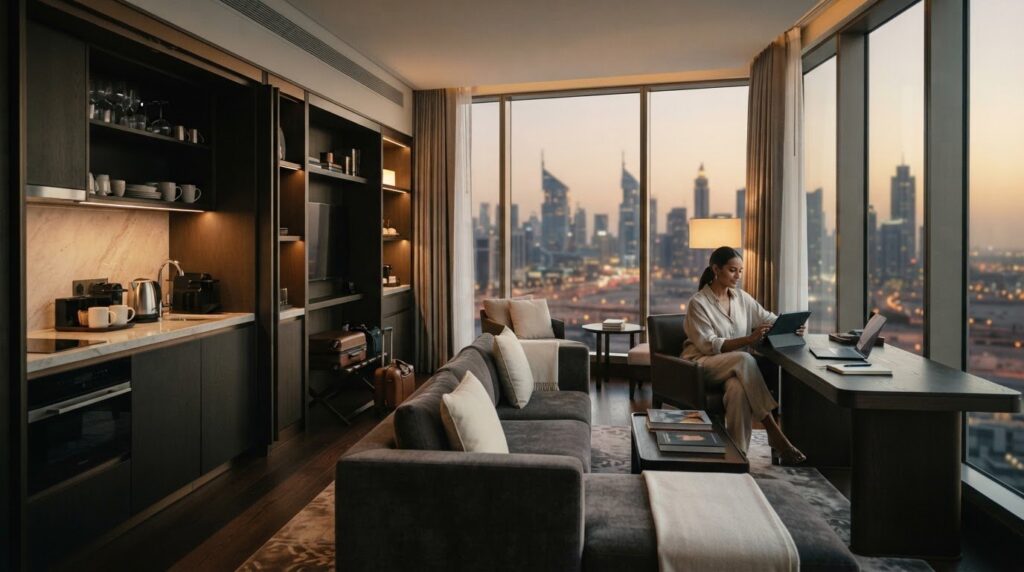
The most impressive lobby won’t make a hotel comfortable on day twenty. If you’re deciding what to look for in a long stay hotel, start with how well the room supports everyday life: space to unwind, practical amenities, privacy, and a setting that suits your routine. Details that seem minor on the first night can shape the whole stay.
A longer booking may call for both comfort and attentive service, but housekeeping schedules, included amenities, and booking terms vary. A hotel may also suit you differently from a serviced apartment, especially when you consider how you’ll cook, work, and manage your stay. Checking these details before committing helps you compare options with confidence.
This guide offers a practical, luxury-minded framework for choosing a stay that feels comfortable beyond the first few nights. You’ll learn how to assess room layout and everyday amenities, compare service and housekeeping arrangements, and review rates, inclusions, extensions, and cancellation conditions. With the right questions in hand, you can better judge what will make your time away comfortable.
Key Takeaways
- Assess how the room supports your daily routines, from storage and seating to cooking, laundry, and connectivity.
- Use a consistent framework for what to look for in a long stay hotel, weighing comfort, service, convenience, and booking terms together.
- Compare hotels, serviced apartments, and villas based on the balance of service, privacy, space, and independence you prefer.
- Check whether the location suits your plans, then verify amenities, inclusions, housekeeping, and cancellation conditions for the specific booking.
- Shortlist properties against your non-negotiables and compare the full stay experience, not just a headline room category.
What to Look for in a Long Stay Hotel Before You Book
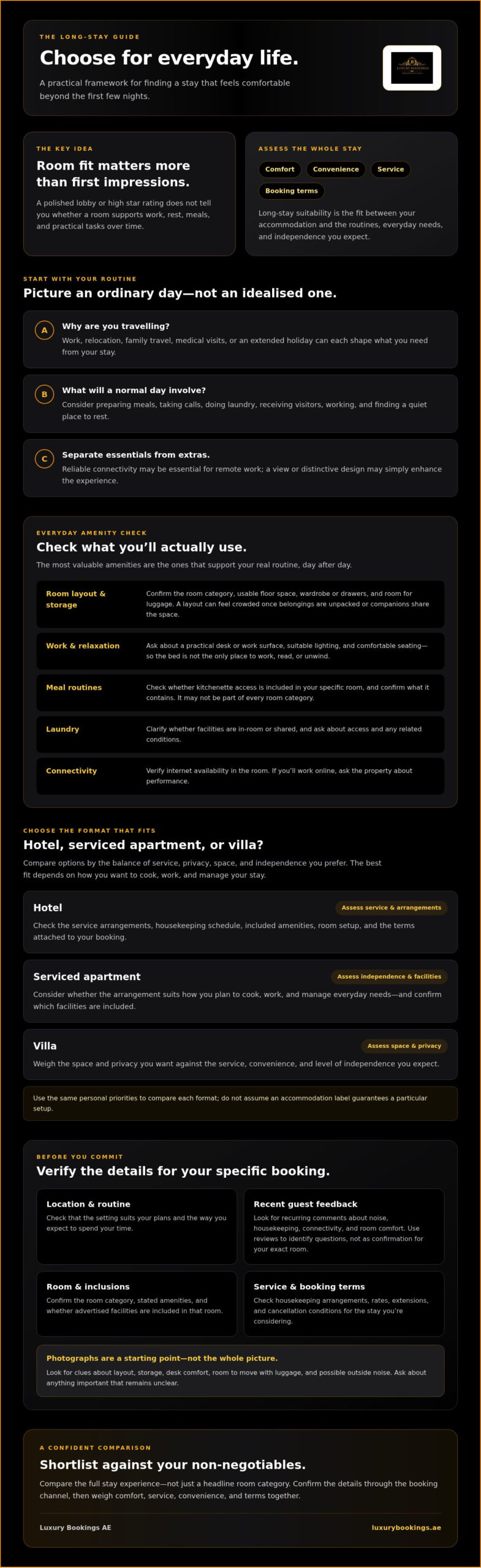
A long stay is a booking where daily routines deserve as much attention as the first impression. A polished lobby or high star rating can signal quality, but neither tells you whether the room will support work, rest, meals, and practical tasks over time. To decide what to look for in a long stay hotel, assess comfort, convenience, service, and booking terms together.
Long-stay suitability is the fit between your accommodation and the everyday needs, routines, and level of independence you expect throughout your visit. That fit depends on why you’re travelling, how long you plan to stay, whether you’ll work, who’s joining you, and which habits you want to maintain. A solo guest working remotely may prioritise quiet and a usable desk; a family may need more space and convenient laundry access.
Which long-stay needs should you identify first?
Start with the purpose of your trip: work, relocation, family travel, medical visits, or an extended holiday. Then picture an ordinary day rather than an idealised one. Will you need to prepare meals, take calls, do laundry, receive visitors, or find a quiet place to rest? If you’re weighing a hotel against a more independent format, a Serviced apartment offers a useful point of comparison.
Separate non-negotiables from nice-to-haves. Reliable connectivity may be essential for remote work, while a view or distinctive design may simply enhance the experience. This distinction keeps attractive extras from distracting you from practical needs that will matter throughout the booking.
Why does the first impression not tell the whole story?
Room photographs are selected to show a space at its best. They may not reveal how much clothing storage is available, whether a desk is comfortable for regular use, how easily you can move around with luggage, or whether outside noise could interrupt your rest. Check room details and images for clues about the layout, then ask about anything important that remains unclear.
Read recent guest feedback with a long-stay perspective. Look for recurring comments about noise, housekeeping, connectivity, or room comfort rather than letting one unusually positive or negative review decide for you. Reviews can help you identify questions, but they can’t confirm what applies to your specific room or booking.
Before committing, confirm key details through the booking channel, including the room category, stated amenities, service arrangements, and applicable booking terms. Luxury Bookings AE facilitates bookings for luxury hotels worldwide, including long-stay accommodation. Check property-specific features and policies for the stay you’re considering.
Which Long-Stay Hotel Amenities Make Everyday Life Easier?
The most valuable amenities are the ones you’ll use regularly, not simply the ones that make a listing look impressive. A kitchenette may matter if you prefer preparing breakfast, while a practical work surface can make remote work more comfortable. Useful long-stay amenities are those that support your actual routine, day after day.
Use this comparison to turn the question of what to look for in a long stay hotel into a focused room-by-room assessment:
| Need | What to check | Why it matters during an extended stay |
|---|---|---|
| Room layout and storage | Confirm the room category, usable floor space, wardrobe or drawers, and room for luggage. | A layout that works for a short visit may feel crowded once belongings are unpacked or companions share the space. |
| Work and relaxation | Ask whether the room has a practical desk or work surface, suitable lighting, and comfortable seating. | A supportive setup makes it easier to work, read, or unwind without relying on the bed for every activity. |
| Meal routines | Check whether kitchenette access is included in your specific room, and confirm what it contains. | Cooking facilities can offer more independence, but an advertised kitchenette may not be part of every room category. |
| Laundry | Clarify whether laundry facilities are in-room or shared, and ask about access and any related conditions. | Knowing the arrangement helps you plan clothing and everyday errands for the length of your stay. |
| Connectivity | Verify internet availability in the room and ask the property about performance if you’ll work online. | Reliable access can be essential for calls, remote tasks, and staying connected throughout the visit. |
Descriptions can use the same amenity label for very different arrangements. A facility may be in your room, shared with other guests, or available only on request. Confirm which applies to your booking instead of assuming every advertised feature is included.
Does the room support work, rest, and privacy?
Look beyond the room’s headline category. Consider whether the desk, lighting, and seating suit the hours you expect to spend there, and whether the space can accommodate your luggage and companions without making daily movement difficult. Ask about potential noise, room location, privacy, and whether you can request a quieter room. Treat any preference as something to confirm, not an assured feature.
Which hotel services matter after the first week?
Ask how often housekeeping is scheduled, how linen is handled, and what laundry options are available. Then consider whether dining, room service, fitness facilities, or concierge services match your routine and the hours you expect to use them. Confirm what is included, shared, or subject to separate conditions. If you’re comparing long-stay hotel options, use these details to assess each property against your everyday priorities.
Hotel, Serviced Apartment, or Villa: Which Suits a Long Stay?
The right format depends on how you want your days to feel. A hotel may suit guests who value access to on-site services, while an apartment-style stay can offer more independence for cooking and relaxing in separate areas. A villa may be worth considering when privacy and shared space for a group matter more than hotel-style services.
| Format | May suit you if… | Confirm before booking |
|---|---|---|
| Hotel | You prefer a familiar service structure and want access to services such as reception or housekeeping. | Which services are available during your dates, how often housekeeping is scheduled, and what is included in your room and rate. |
| Serviced apartment | You value greater independence, kitchenette access, or a separate living area. | Whether those features apply to the specific unit, plus the service arrangements and booking conditions. |
| Villa | You’re travelling with others and prioritise privacy and shared space. | The actual layout, included services, and terms for the property and dates you’re considering. |
These formats are not interchangeable, and labels alone don’t establish what a stay includes. Review the specific room or property description and confirm important features and booking terms before committing. A serviced apartment may provide kitchen facilities or distinct living space, but details depend on the unit. Likewise, verify a hotel’s service level and a villa’s layout rather than assuming what they provide.
When is a hotel the more convenient choice?
A hotel can be a practical match if you prefer services in one setting and a simpler arrangement for everyday needs. Access to reception or housekeeping may be useful for solo travellers, business guests, and visitors unfamiliar with the destination, but service schedules and availability differ by property. Confirm what operates throughout your dates and whether the arrangements suit the length of your stay.
When might apartment-style space or a villa fit better?
Consider an apartment-style stay if cooking, independent routines, or a separate place to relax are priorities. If several guests need room to spend time together while retaining greater privacy, a villa may fit better than a hotel room. For a Dubai-specific overview, explore this Dubai luxury villa rental guide. A penthouse is another accommodation option to consider in Dubai; see the Dubai luxury penthouse guide.
Deciding what to look for in a long stay hotel involves more than amenities. Consider how much service, privacy, space, and independence you want. Compare those priorities with the confirmed details of each option, then choose the format that best supports your daily routine.
How to Compare Long-Stay Hotel Locations, Reviews, and Booking Terms
A property can look ideal on a map and still make everyday plans inconvenient. Before booking, consider location, guest feedback, inclusions, and reservation conditions together. This checklist helps you judge what to look for in a long stay hotel beyond its address or room description.
- Map your daily destinations. Mark the places you expect to visit regularly, such as work appointments, medical facilities, shops, or family. Check the distance and likely journey from the hotel, not just its proximity to a landmark.
- Assess transport and the surrounding area. Consider available transport options, typical routes, and whether the neighbourhood suits your evening routines and preferred pace. A central address isn’t automatically the most convenient if it adds time to the trips you’ll make most often.
- Read recent reviews for patterns. Look for repeated observations about noise, service consistency, cleanliness, or whether rooms suit longer visits. One review reflects one guest’s experience; several similar comments may suggest a question worth raising with the property.
- Compare what’s included. Check the specific room and booking details for services and facilities you expect to use. Clarify how housekeeping, laundry, utilities, and any additional occupants are handled, rather than assuming these are included because they appear in general hotel information.
- Confirm the reservation terms. Review cancellation conditions, payment timing, any deposit, applicable taxes, and minimum-stay requirements. Ask what happens if your dates change or you need to leave earlier than planned, and request clarification of any condition that isn’t clear.
How can you judge whether a hotel location works?
Test the location against your real itinerary. A hotel near restaurants may still be inconvenient if your regular appointments are elsewhere or transport options don’t match your preferences. Consider the routes you’ll take at different times of day, access to essential services, and whether the surrounding area suits how you expect to spend evenings. Choose for your plans, not prestige alone.
Which long-stay terms deserve careful confirmation?
Read the conditions attached to your selected room and dates, not only the general booking summary. Confirm every essential amenity and long-stay condition in writing before finalising a booking. Keep the response with your reservation details so you can refer to the confirmed arrangements later. If a policy remains ambiguous, seek clarification through the booking channel before committing.
Once your priorities and terms are clear, you can explore long-stay hotel options with a more discerning eye.
Choose a Long-Stay Hotel That Feels Right Beyond Check-In
Your shortlist should reflect how you’ll actually live during the stay, not simply which property makes the strongest first impression. To decide what to look for in a long stay hotel, compare each option against your non-negotiables, daily routines, and preferred level of service. A beautifully presented room may still be the wrong fit if a confirmed detail doesn’t support the way you plan to work, rest, or spend time with companions.
Use a simple scorecard to make the decision more considered:
- Mark essentials as pass or fail. If a requirement such as a particular room layout or in-room facility is essential, don’t let a strong overall impression compensate if it isn’t confirmed.
- Rate the daily fit. Compare how well each property supports your routine, including work, downtime, and the services you expect to use.
- Assess the complete booking. Weigh the location, confirmed room details, service arrangements, inclusions, payment conditions, and cancellation terms together.
This keeps a single appealing feature or headline room category from overshadowing the full stay. Keep written confirmations for property-specific details that influenced your choice, and review them alongside the booking terms before finalising.
What should your final long-stay checklist include?
Before you decide, make sure you have clear answers about the room layout, storage, work setup, connectivity, and any essential in-room facilities. Check that the location suits your plans and that the confirmed service arrangements match your preferences. Then review the complete booking terms, including cancellation conditions. If any important point is vague, seek clarification through the booking channel and retain the response.
How can you make the booking process feel more considered?
Share your destination, dates, length of stay, party size, and practical priorities when exploring options. Specific questions help you compare properties on relevant details rather than relying on general descriptions. Luxury Bookings AE facilitates bookings for luxury hotels and long-stay accommodation worldwide. Confirm property features, availability, and terms for the option you’re considering.
With your priorities in view, Explore luxury hotel stays worldwide and consider which options merit a closer look. A little clarity before booking can help create a stay that feels comfortable well beyond check-in.
Choose a Stay That Supports the Way You Live
The best long-stay choice is not necessarily the grandest room or most impressive address. It’s the accommodation that fits your routines, priorities, and preferred level of service throughout the visit. As you consider what to look for in a long stay hotel, weigh everyday comfort alongside location and booking terms, and base your decision on details confirmed for the specific stay.
A clear shortlist makes the choice easier. Keep your essential needs in view, compare the full experience rather than a single amenity, and clarify any condition that could affect your plans. If a hotel doesn’t offer the balance of space, privacy, or independence you want, another type of accommodation may be worth considering.
Luxury Bookings AE facilitates bookings for luxury hotels worldwide, including long-stay accommodation. Explore luxury hotel stays worldwide and consider which options align with your extended-stay requirements. With thoughtful comparisons and clear expectations, you can look forward to a stay that feels comfortable well beyond check-in.
Frequently Asked Questions
What should I look for in a hotel for a long stay?
Prioritise features that support your normal routine, such as usable space, storage, work arrangements, connectivity, laundry, housekeeping, and a convenient location. To decide what to look for in a long stay hotel, check which features are included in your specific room and booking rather than relying on general descriptions. Read recent guest feedback, then confirm essential details and long-stay conditions through the booking channel. Choose the property that meets your needs consistently, not simply the one with the most amenities.
Is a hotel or serviced apartment better for a long stay?
Neither is universally better; the right option depends on your routines and preferred service level. A hotel may suit guests who value on-site services and a staffed reception. A serviced apartment may appeal if you want more independence, a kitchenette, or a separate living area. Compare the actual property, selected room, included services, and booking terms instead of relying on the category name. Your party size and everyday habits can help determine which format fits.
How much does a long-stay hotel cost?
There’s no single cost for a long-stay hotel, since the total depends on the destination, dates, property, room type, length of stay, and included features or services. Compare the full confirmed terms rather than a headline rate alone. Check applicable taxes, deposits, inclusions, and cancellation conditions, and ask whether a long-stay arrangement applies to your dates. Verify all figures with the booking channel so you can assess options on the same basis before committing.
Can I negotiate a hotel rate for a long stay?
You can ask whether a property offers different terms for an extended booking, but arrangements and availability vary. Share your dates, length of stay, room requirements, and any flexibility with the hotel or booking channel, then request the full offer in writing. Compare the inclusions as well as the quoted amount. Don’t assume a short-stay rate or advertised benefit also applies to a longer reservation; confirm the conditions for your specific booking.
What amenities are essential in a long-stay hotel?
Essential amenities depend on how you expect to spend your days. Consider whether the room offers comfortable space, storage, dependable connectivity, and a suitable work area, then check laundry access and housekeeping arrangements. A kitchenette or dining options may matter if you prefer flexibility around meals. Confirm whether each feature is in your selected room, shared on-site, or available only on request. Ask about any conditions that could affect your use of it during the stay.
How do I know if a hotel is suitable for remote work during a long stay?
Ask about internet access and performance in the specific room rather than relying only on a general Wi-Fi listing. Check whether the room has a comfortable work surface and suitable lighting, and consider noise and privacy for calls. Recent guest reviews may flag recurring practical concerns, but they can’t confirm conditions for your booking. If video calls or uninterrupted work are essential, request clear confirmation through the booking channel before reserving.
What should I check in a long-stay hotel’s cancellation policy?
Review the cancellation deadline, any penalties, payment schedule, deposit conditions, and whether the terms apply to the full stay or individual nights. Check how changes to your dates or guest numbers are handled, and confirm whether a minimum-stay condition applies. Policies may differ by property, room, and booking channel, so read the conditions attached to your reservation rather than relying on a general description. Save the confirmed terms and ask about anything unclear before finalising the booking.