
What if the detail that shapes your villa stay isn’t the view, but a line in the agreement? Before booking, it helps to know what’s included, what may cost extra, and what happens if plans change. This luxury villa rental agreement checklist walks you through the key terms to review, so the written agreement matches the stay you expect.
Use it to compare agreements consistently and review the property, dates, inclusions, charges, payments, deposits, cancellations, arrival, occupancy, and permitted use. A careful read before signing can help you spot gaps while there’s still time to clarify the terms.
Key Takeaways
- Use the luxury villa rental agreement checklist to verify the parties, property, dates, occupancy, and permitted use before committing.
- Read the details behind each clause, particularly payment, deposit, cancellation, change, and refund terms.
- Compare agreements using the same categories to spot differences in inclusions, costs, and responsibilities.
- Before signing, match the agreement against your booking details and save a copy of the completed document.
- Clear terms help set expectations for your stay. Explore handpicked luxury properties worldwide with Luxury Bookings AE.
Why a luxury villa rental agreement deserves a careful review
Photographs can show a villa’s setting, and a listing can describe the experience. Neither necessarily spells out the terms you’re accepting. The rental agreement records the stay’s conditions and responsibilities, from who may occupy the property to the dates and permitted uses covered by the booking.
A villa rental agreement should identify who is booking, which property and dates the booking covers, who may stay, what is included, and which terms apply to changes and responsibilities. Use these points as a starting place for your luxury villa rental agreement checklist, not as a replacement for reading the documents themselves. For general context, Wikipedia’s overview of vacation rental agreements describes the broader arrangement behind this type of stay.
Keep related documents together, but understand what each one does. A booking confirmation records reservation details; a property description presents the accommodation and advertised features; house rules set expectations for behaviour and use; and the rental agreement records the terms being accepted. If a detail conflicts across documents, don’t assume which version takes precedence. Get the point clarified in writing before committing.
What the agreement should clarify before you book
Start by matching the agreement to your reservation. Check that it names the contracting parties, identifies the villa by address or another clear description, states the arrival and departure dates, and sets out the approved occupancy. Compare each detail with your booking confirmation and the property description. A difference in a name, date, or property identifier can create uncertainty about what the agreement covers.
Look for precise wording, too. If terms such as “additional guests” or “shared areas” appear without a clear meaning, note the ambiguity and have it explained or corrected in writing before proceeding. Clear terms make it easier to compare the agreement with the stay you intend to book.
Why luxury stays still need practical checks
A polished villa experience often depends on details that promotional language alone can’t settle. The documents should make clear what privacy means, which areas guests can access, which services are included, and how the property may be used. A description such as “private retreat” may sound reassuring, but the written terms should clarify any relevant access arrangements or shared facilities.
Separate descriptive language from specific commitments. “Exceptional service” sets a tone, but doesn’t explain which services are included or when they’re provided. Look for concrete written terms and note any clauses that refer to house rules or other documents. These checks help align expectations before arrival and support a more considered stay.
Luxury villa rental agreement checklist: the clauses to inspect
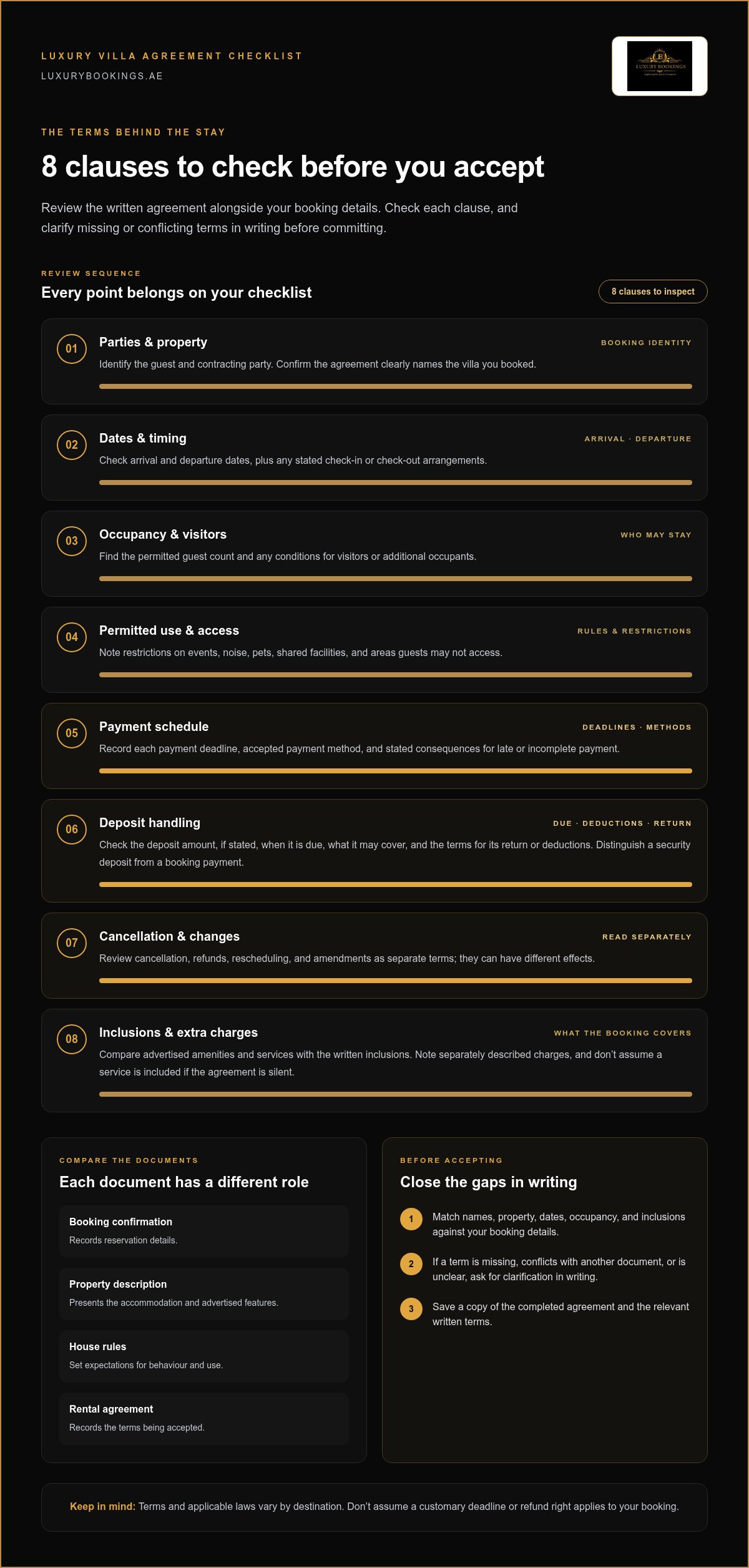
Use this luxury villa rental agreement checklist to review the commitments behind a stay, not just its headline description. Read the agreement alongside the booking confirmation, property listing, and any house rules it refers to. If a key term is missing, conflicts with another document, or could be interpreted in more than one way, resolve the point in writing before accepting the agreement.
- Parties and property: Identify the guest and contracting party, and confirm that the agreement clearly identifies the villa you booked.
- Dates and timing: Check the arrival and departure dates, along with any stated check-in or check-out arrangements.
- Occupancy and visitors: Find the permitted guest count and any conditions that apply to visitors or additional occupants.
- Permitted use: Note restrictions on events, noise, pets, shared facilities, or areas guests may not access.
- Payment schedule: Record each payment deadline, accepted payment method, and stated consequences for late or incomplete payment.
- Deposit handling: Identify the deposit amount, if stated, when it is due, what it may cover, and how the agreement describes its return or any deductions.
- Cancellation and changes: Read the terms for cancellation, refunds, rescheduling, and amendments separately.
- Inclusions and extra charges: Compare advertised amenities and services with the written list of what the booking includes, and note separately described charges.
Written inclusions make villa offers easier to compare because they show which amenities, services, and costs belong to each booking. If a listing mentions a service but the agreement is silent, don’t assume it forms part of the stay. Look for a clear reference in the booking documents and save the relevant wording.
Payment, deposits, cancellation, and changes
Follow the payment terms from the first deadline to the final balance, noting how and when each payment is due. Read deposit wording closely: distinguish a security deposit from a payment toward the booking, and check the stated conditions for deductions or return. Cancellation, refund, rescheduling, and amendment provisions can have different effects, so don’t treat them as interchangeable. Terms and applicable laws vary by destination; don’t assume a customary deadline or refund right applies to your booking.
Occupancy, access, services, and property use
Confirm the approved guest count and whether visitor rules limit who may enter the villa. Check the stated arrival and access arrangements, including any restricted areas. Then compare the agreement’s inclusions with the amenities and services that influenced your choice. Pay attention to responsibilities for damage or maintenance, as well as clauses on noise and events. If a restriction or service description is broad, get its practical meaning clarified in writing before committing.
Reading each clause carefully can make expectations more precise before you travel. Once you know which terms matter for your stay, explore luxury villa stays with a clearer idea of what to compare in the booking documents.
How to compare villa agreements without overlooking important differences
Two villa offers can look similar in photographs and promotional descriptions while setting out different responsibilities, services, or payment conditions. A side-by-side review brings those differences into view. Use the luxury villa rental agreement checklist as a starting point, then compare the booking documents rather than relying on listing summaries or assumptions.
A comparable offer is one whose inclusions and conditions are stated clearly. If an important detail is absent, record it as missing rather than treating it as included. This keeps your comparison grounded in what each stay commits to in writing.
Build a like-for-like agreement comparison
Create one row for each decision point and one column for each villa. Copy exact wording when precision matters, or write a neutral summary that preserves its meaning. Keep your notes separate from the agreement’s terms so it’s clear what the document says and what you’ve inferred.
- Stay details: Compare the property identification, dates, approved occupancy, and visitor conditions.
- Inclusions: Record which amenities and services are expressly included and which appear only in promotional material.
- Payments: Note deadlines, payment methods, deposit conditions, and separately described charges.
- Cancellation and changes: Summarise cancellation, refund, rescheduling, and amendment wording in separate entries.
- Responsibilities: Compare expectations for access, property use, damage, maintenance, and house rules.
For example, if a property description mentions a service but the agreement doesn’t address it, mark the item as “not stated.” Don’t treat silence as confirmation. If another agreement expressly includes that service, the difference matters even if the listings use similar language. Likewise, flag conflicting dates or occupancy details as discrepancies to resolve, not minor variations to overlook.
Spot wording that deserves closer attention
Section headings don’t tell the whole story. Two agreements might both use “Additional charges,” but only one may explain what triggers a charge and how it’s handled. Read the operative wording and consider its practical effect. Clauses that give one party broad discretion, leave fees undefined, or describe responsibilities vaguely deserve closer attention.
Ambiguous wording can leave guests and hosts with different expectations. “Subject to approval,” for example, may not say who decides, what requires approval, or when a decision is made. An access clause may also need to specify which areas or circumstances it covers. Note the question beside the relevant comparison row and get a clear written explanation before relying on your interpretation.
Keep legal conclusions separate from your comparison notes. The meaning and effect of agreement terms can depend on the destination’s laws and the specific circumstances. If a clause raises a legal concern, consider advice from a qualified professional familiar with the relevant jurisdiction. Your comparison can help identify the issue, but it isn’t a legal ruling.
A pre-signature checklist for your villa booking
Before committing, review the documents in a deliberate order. This final pass can catch booking mismatches, preserve important clarifications, and leave you with a reliable record to consult before travel. Keep the agreement, confirmation, property description, and any referenced rules together as you review them.
Review the documents and resolve inconsistencies
Read the agreement alongside the booking confirmation and property description instead of treating any one document as the complete picture. Use this luxury villa rental agreement checklist in sequence: match the details, identify gaps, resolve material differences in writing, then sign and save the final version.
- Match the booking parties. Check that the guest names and contracting party are consistent across the agreement and confirmation. If the person signing differs from the lead guest, make sure the documents clearly explain the arrangement.
- Verify the villa and dates. Compare the property name or address, arrival and departure dates, and any stated check-in or check-out times with the confirmation. A date discrepancy can affect the stay you believe you’ve reserved.
- Confirm occupancy and use. Make sure the approved guest count matches your party and that visitor conditions or important use restrictions are clear. Don’t assume the villa’s size or photographs indicate how many people may stay.
- Match the written inclusions. Check that services or amenities important to your booking appear in the written terms or in a document the agreement clearly incorporates. If an assurance was made verbally, have it recorded in writing before signing.
- List unanswered questions. Note unclear fees, conflicting instructions, undefined responsibilities, or wording that could be read in more than one way. Keep written replies with your booking documents.
- Resolve material discrepancies before signing. If a key detail remains inconsistent or an important assurance is still only verbal, pause. Proceed once the relevant terms have been clarified in writing and the updated documents reflect the agreed arrangement.
- Save the completed record. Keep the final signed agreement, booking confirmation, property description, house rules, and written amendments together. Record payment deadlines, arrival instructions, and relevant contact details in the same place.
Keep a clear record after signing
Review the documents before departure instead of relying on memory or informal messages. Check the arrival details and payment schedule against your saved copies, and store any later written changes with the signed agreement. For Dubai or another destination, verify current rental requirements through relevant official authorities. Requirements can vary by location and may change. Seek qualified local advice if you need help interpreting a legal obligation.
Once your review is complete, explore handpicked luxury villa stays with a clearer sense of the details to align before arrival.
Choose a considered luxury villa stay with Luxury Bookings
A considered villa booking pairs an exceptional setting with a clear understanding of what the stay involves. Written terms align expectations before arrival, leaving you free to focus on the experience: time to unwind, gather, and enjoy the property. This checklist can help you review the documents, but it isn’t legal advice or a substitute for understanding the terms of your booking.
What a considered booking experience looks like
Luxury Bookings AE is a Dubai-based luxury travel and concierge platform offering handpicked luxury rooms, properties, and apartments worldwide. Its selection of stays supports a thoughtful booking process: consider how the accommodation suits your plans, then read the written terms before you commit. Luxury Bookings has served more than 5,000 clients across its business. This is a company-wide figure, not a villa-specific review count.
Personalized service and careful preparation can make the journey from discovery to arrival feel more considered. The agreement remains the place to look for the terms of your stay. A polished description can help you picture the setting, while written booking details establish practical expectations. Keep both in view, and resolve important uncertainties before signing. This article does not provide legal review, and no booking outcome or particular agreement term is guaranteed.
Explore Dubai villa stays and related guidance
If Dubai is your destination, use a Dubai luxury villa rental guide as a starting point for considering the location and the kind of stay you have in mind. Pair that planning with a careful review of the agreement for the property you’re considering. Local rental requirements can vary and change, so verify legal or regulatory details through current, authoritative sources for the destination.
With your priorities in view, explore luxury villa stays through Luxury Bookings AE and discover handpicked accommodation options for a more considered escape.
Make room for a more considered villa escape
The right villa is more than a beautiful setting. It’s a stay suited to your plans, with expectations aligned before you arrive. Keep the luxury villa rental agreement checklist close as you compare options and choose a property, and let the written terms inform your decision.
Luxury Bookings AE brings together handpicked luxury rooms, properties, and apartments worldwide. Its regional network includes partnerships with more than 1,500 hotels. This company-wide figure reflects broader hospitality relationships, not villa-specific partnerships. For your next escape, start with accommodation that suits your sense of place and style.
Explore handpicked luxury villa stays and take the next step toward a well-considered getaway. Review the details before booking, then look forward to the experience ahead.
Frequently Asked Questions
What should a luxury villa rental agreement include?
It should identify the parties, villa, stay dates, approved guests, payment obligations, and rules that affect your use of the property. Look for clear terms on cancellation, changes, deposits, services, and responsibility for damage. This luxury villa rental agreement checklist can help you review those areas. If your party includes children or a visitor, make sure the occupancy wording covers the arrangement you intend.
Should I sign a villa rental agreement before paying?
There isn’t one universal sequence; booking processes and applicable rules can differ. Before sending payment, understand what it covers, when it’s due, and which written terms apply if plans change. If a payment request arrives before you’ve received or understood the relevant documents, pause and get an explanation through the booking channel. Keep the payment instructions and agreement together for reference.
Can a villa rental agreement charge a damage deposit?
An agreement may state a damage deposit, but whether it can be charged and how it must be handled depends on the contract and applicable local rules. Check whether the amount is described as refundable, what circumstances may lead to deductions, and how any deduction is explained. Wording that permits deductions without describing the process can leave expectations uncertain. Seek destination-specific guidance if you need to understand your legal rights.
What happens if the villa description differs from the agreement?
Don’t assume the description automatically overrides the agreement, or the other way around. The effect can depend on the booking documents and applicable law. Identify the specific difference, such as an amenity named in the listing but absent from the terms, and get a written explanation before relying on it. Save the response with your booking records. If the discrepancy could materially affect your stay, consider qualified local advice before signing.
Are villa rental cancellation terms the same everywhere?
No. Cancellation wording and the rules affecting a booking vary by destination and agreement, so another villa’s policy may not apply to yours. Check the stated process for cancelling, the deadlines, and how any refund is calculated or communicated. If travel disruption is a concern, read the policy before paying rather than assuming a flexible option is available. For legal questions about your rights, consult a qualified professional familiar with the destination.
Do villa rental agreements cover services and amenities?
They may, but a service or amenity is easier to rely on when the agreement includes it or clearly refers to a document that does. If a listing describes a chef, housekeeping, or pool access, check how that feature is addressed in the booking terms. Note any conditions, limitations, or separate charges. Photographs and general promotional language alone don’t establish that a particular service forms part of your reservation.
Can I negotiate the terms of a luxury villa rental agreement?
You can ask whether a term can be changed, but the other party doesn’t have to accept a requested amendment. Be specific: identify the clause and propose the wording or arrangement you need, such as adding a named guest or clarifying access. If the change is agreed, have it recorded in writing and reflected in the final documents before signing. Verbal assurances can be difficult to distinguish from the terms ultimately accepted.