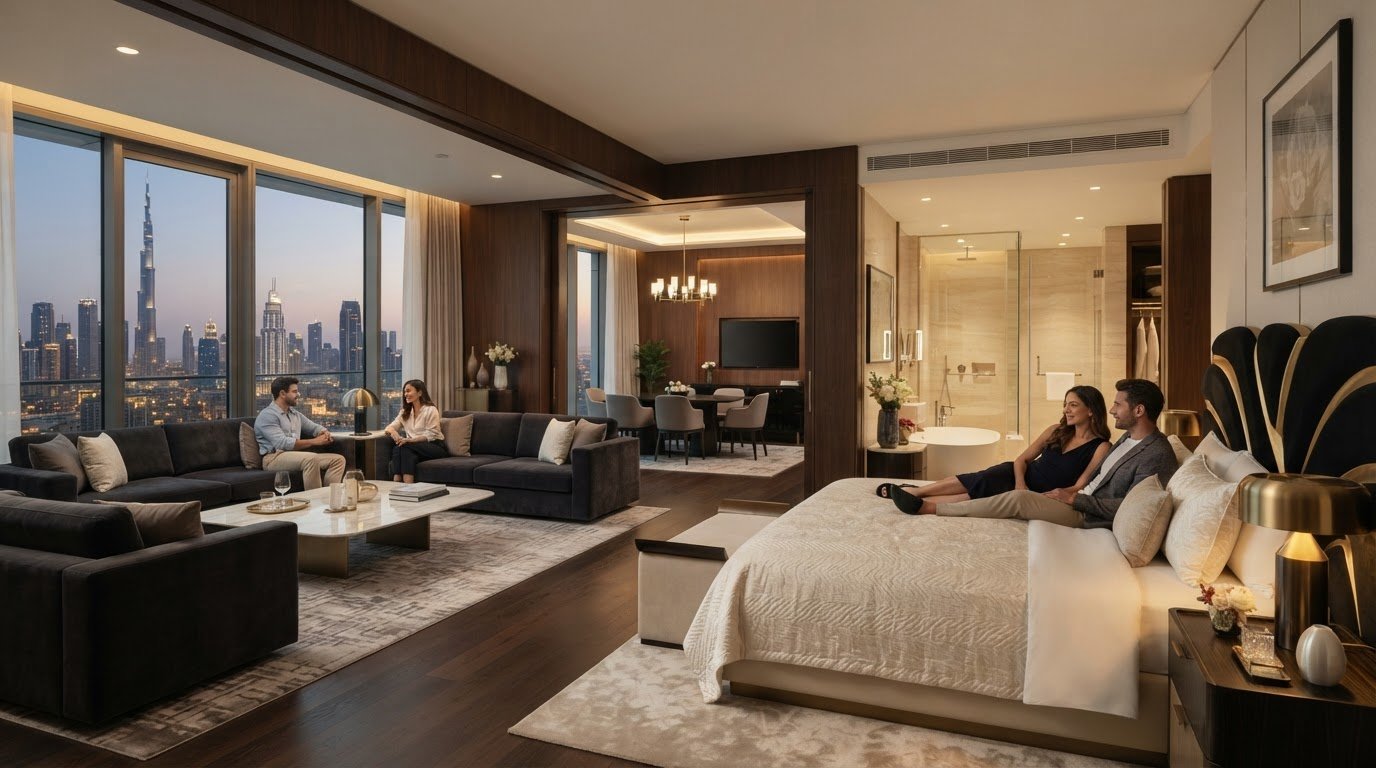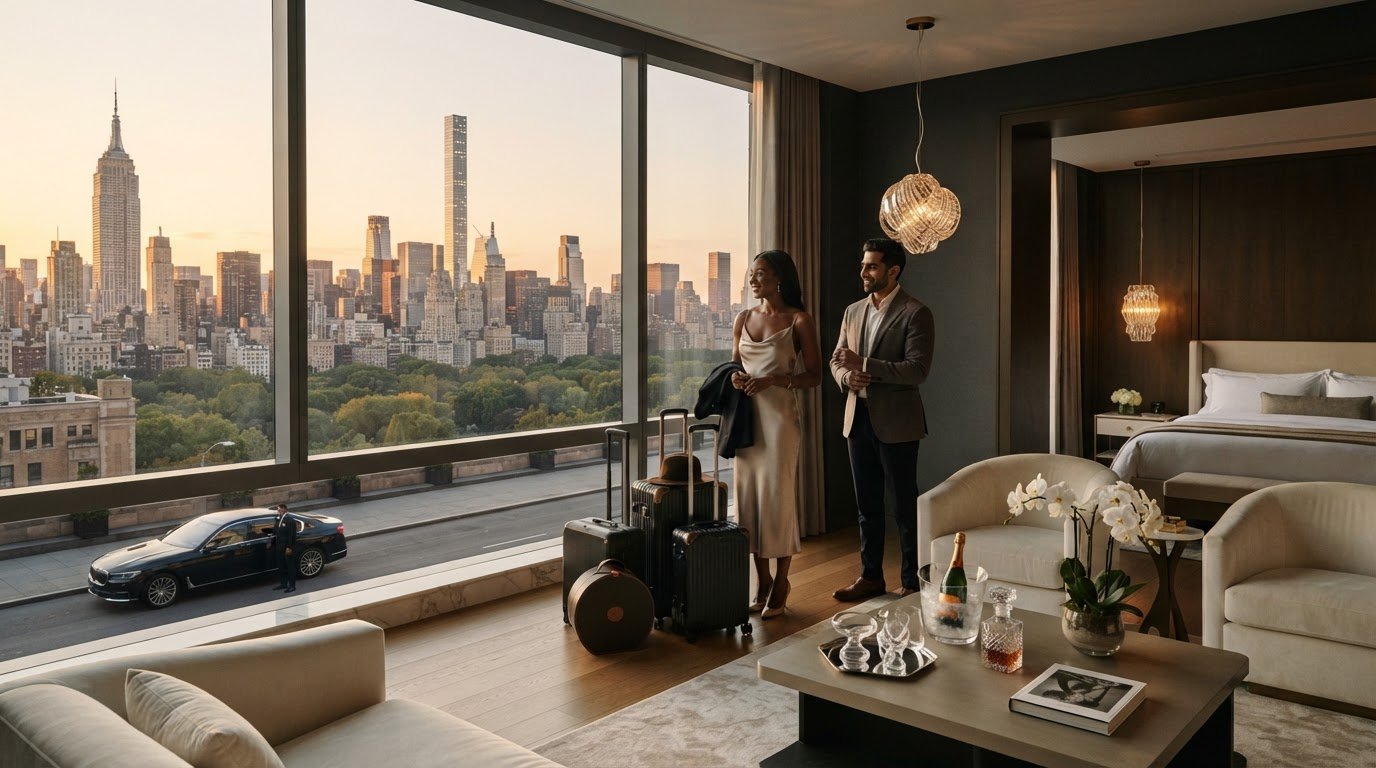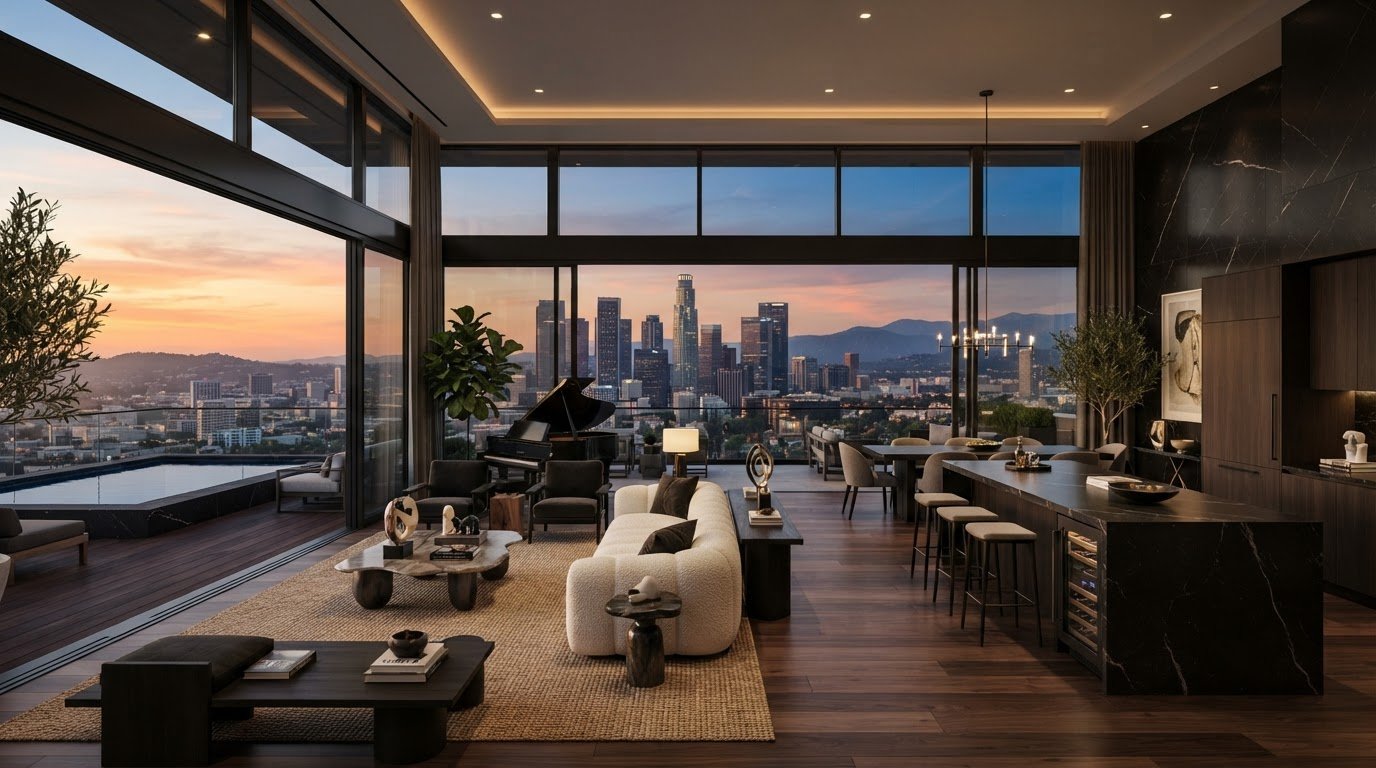
A presidential suite is defined not just by a grand bedroom, but by separate spaces for sleeping, relaxing, and hosting. To understand what is included in a presidential suite, look beyond the name: layouts may have separate living and dining areas, an en-suite bathroom, and a walk-in closet. Bed arrangements and guest capacity depend on the specific suite.
A spacious, polished stay is part of the appeal, but details vary between hotels. Some suites are designed for entertaining, with a dining room or conference space; others feel more residential, with generous lounge areas and comforts such as in-room dining and coffee facilities.
This guide explores presidential suite examples to help you picture how the rooms work together, which amenities may be included, and how bed arrangements relate to the layout and guest capacity. A presidential suite is best understood as a collection of rooms, not simply a more impressive place to sleep.
Key Takeaways
- Compare suite layouts by how they separate sleeping, lounging, dining, and hosting areas.
- Presidential suites can include distinctive spaces, such as a private conference room, rather than only a larger bedroom.
- Consider in-room dining, drinks, and coffee as part of the overall stay, while recognizing amenities vary by property.
- Match the bed arrangement and stated occupancy to your group’s needs; the suite name alone doesn’t tell you how many guests it accommodates.
- Look at bedroom and bathroom layouts together to understand how comfortably the suite will work for your stay.
What is it like to stay in a Presidential Suite?
A presidential suite combines private sleeping quarters with spaces for relaxing, dining, or hosting. Traditional descriptions call for south-facing suites in the Northern Hemisphere and north-facing suites in the Southern Hemisphere. An en-suite bathroom and walk-in closet are also traditional features, though layouts differ by property.
Consider two Boston examples. At Boston Harbor, the presidential suite dining room seated eight, making it suitable for a private meal or gathering. A downtown Boston presidential suite featured a 149-square-foot outdoor terrace. These examples show how a suite can extend beyond the bedroom, with dedicated areas for entertaining or enjoying fresh air.
Technology adds another layer, but features vary by hotel. A suite might have a television in the lounge, bedside charging, or lighting controls; these are examples, not universal standards. On arrival, locate the lighting controls, charging points, and entertainment system before settling in. This makes it easier to use the suite comfortably.
Bathrooms can feel more like private retreats than standard hotel washrooms. An en-suite bathroom connects directly to the sleeping area, while a walk-in closet keeps clothing and luggage separate. Some suites include spa-style details such as a soaking tub or separate shower, but the features and layout depend on the property.
Sustainability features vary by hotel, too. A suite may have energy-saving lighting, refillable bathroom dispensers, or water-conscious fixtures as part of the property’s approach. These details can shape your stay without changing the basic layout. Look for named features in the room description and consider how they fit your preferences and routine.
Do presidential suite amenities vary by hotel or resort? Yes. The Boston dining room and terrace examples show how features differ between properties. The suite name signals a premium category, not a universal list of amenities.
How does a presidential suite compare with an executive suite or penthouse suite? A presidential suite is commonly among a luxury hotel’s most expensive suites. Executive and penthouse labels do not guarantee a consistent layout or amenities across properties, so compare the rooms and features described.
What services come with a presidential suite, such as a butler or concierge? Service arrangements vary by hotel. A concierge may help with guest requests, while butler service is a separate offering, not an automatic feature of the suite name.
What accessibility, security, and privacy features may a presidential suite offer? Accessibility features may include step-free routes or bathroom layouts designed for easier movement. Security and privacy arrangements may include controlled entry or discreet access. These features depend on the property and specific suite.
In-room food, drink and coffee amenities
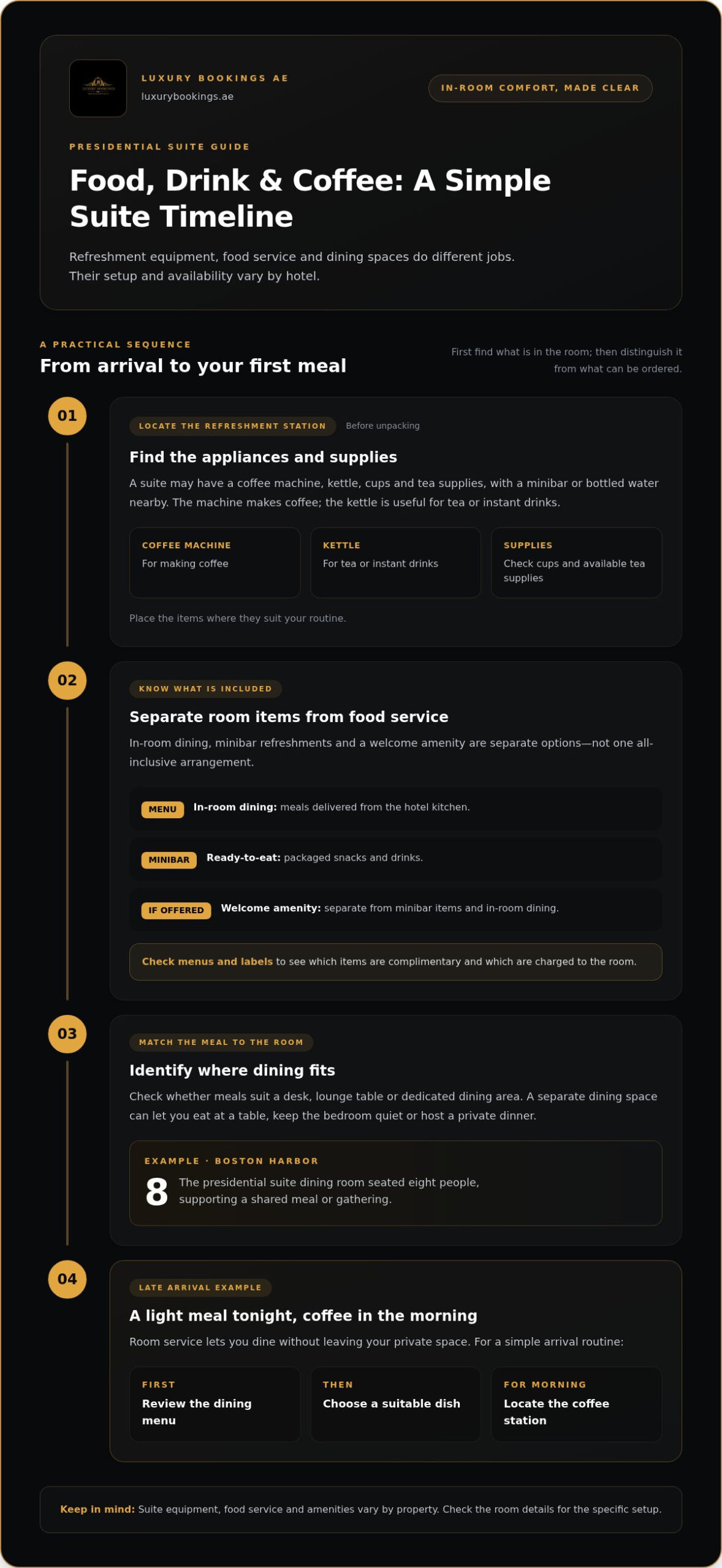
Food and drink arrangements affect how easily you can settle into a presidential suite. A coffee maker by the lounge suits a quiet morning, while room service lets you dine without leaving your private space. The setup varies by hotel, so distinguish the equipment in the room from the food service available.
Start with the coffee station. A suite may have a coffee machine, kettle, cups, and tea supplies, with a minibar or bottled water nearby. Each serves a different purpose: a machine makes coffee, while a kettle is useful for tea or instant drinks. Before unpacking, find the appliances and supplies, then place them where they suit your routine.
Food access often means choosing between separate options, rather than relying on one all-inclusive arrangement. An in-room dining menu lists meals delivered from the hotel kitchen, while a minibar holds ready-to-eat snacks and drinks. A welcome amenity, if provided, is separate from both. Check labels and menus to see which items are complimentary and which are charged to the room.
Imagine arriving after a late flight and wanting a light meal, water, and coffee before bed. The practical sequence is simple: review the dining menu, choose a suitable dish, and locate the coffee station for the morning. Separate dining and refreshment facilities serve different needs, without requiring you to leave the suite.
- Coffee and tea: Note the machine or kettle, available supplies, and where cups are stored.
- Minibar: Distinguish its packaged snacks and drinks from welcome amenities.
- In-room dining: Review the menu for meal choices, ordering instructions, and serving arrangements.
- Dining space: Identify whether meals suit a desk, lounge table, or dedicated dining area.
A separate dining area changes the experience of a delivered meal. You can have breakfast at a table, keep the bedroom quiet, or host a private dinner. In Boston Harbor’s presidential suite, the dining room seated eight people. This example shows how a layout can support shared dining, while coffee and snacks suit more informal moments.
For a stay where private dining and in-room comfort matter, explore presidential suite stays as part of your accommodation planning.
Presidential suite as a set of hotel rooms
A presidential suite is a collection of hotel rooms designed for a prominent guest. Its layout can separate sleeping, relaxing, meeting, and receiving visitors. The distinction matters: the suite’s value comes from how its rooms work together, not simply from one expansive bedroom.
Imagine hosting a private discussion during your stay. A suite with a private conference room gives the group a dedicated meeting space, separate from the sleeping area. Afterwards, you can return to your private quarters. The arrangement supports both business and rest within one suite.
Another layout may prioritize entertaining. A sitting room welcomes visitors, while a separate bedroom keeps personal space apart. A dining area makes a meal feel more composed than eating beside the bed. For a family, distinct spaces can also let different activities happen at once, such as reading in the lounge while someone rests.
Room names alone do not describe the full arrangement. When booking through Luxury Bookings AE, travelers can assess a suite by tracing the route between its spaces:
- Arrival: Identify where guests enter and whether the first space is a lounge or private room.
- Hosting: Look for a conference room, reception area, or dining space suited to visitors.
- Retreat: Note how the bedroom sits apart from shared or entertaining areas.
- Daily use: Consider whether each room has a distinct purpose during the stay.
Presidential and royal suites can differ in how their rooms are used. A presidential suite may have a private conference room, while a royal suite may instead include a formal reception room. At a hotel offering both, the suites may be comparable in size and price but differ in style and facilities. Royal suites may also indicate that royalty stayed there previously.
Style can reinforce the contrast. At hotels with both categories, royal suites may have classical furnishings, while presidential suites may look more modern. Royal suites are more common in countries with monarchies. These are patterns, not universal rules, so the room description matters more than the title.
The name “presidential suite” originated during Woodrow Wilson’s presidency, which lasted from 1913 to 1921. Today, examples include the Plaza Hotel in New York City and the Fairmont San Francisco. When comparing what is included in a presidential suite, focus on its actual rooms and their purpose to see if it suits private meetings, formal entertaining, or your daily use.
Bed configuration and occupancy
A presidential suite’s room count does not tell you how many guests can sleep comfortably. The deciding details are the bed types, their locations, and the suite’s stated occupancy. A suite with a large primary bedroom may suit a couple, while a separate bedroom can give family members more privacy. Sleeping capacity depends on the actual arrangement, not the impressive name.
Match the bed setup to your group. A couple may prefer one shared bed, while friends travelling together may need separate beds. Families might value a primary bedroom and another sleeping area. A sofa bed can offer an additional option in some layouts, but it changes how the lounge functions. Check that the room description identifies which spaces are intended for sleeping.
Consider a family travelling with children. The adults want a private sleeping space, with the children nearby. Separate bedrooms can support this arrangement; a lounge with a convertible sofa may offer another option. Compare the sleeping areas with your preferred bedtime routine to find a layout that preserves comfort and privacy.
- Couple: Look for a shared bed and enough room to move around it comfortably.
- Friends: Compare separate beds with any shared sleeping arrangements.
- Family: Map each guest to a bedroom or suitable additional sleeping area.
- Mixed group: Consider privacy, access to bathrooms, and who shares each space.
Occupancy is separate from bed count. A suite’s maximum guest capacity is the limit stated by the property, while the bed layout shows where people sleep. Extra seating in a living room does not automatically create another sleeping place. Read the occupancy and bed descriptions together to ensure your group’s plans match the sleeping surfaces and permitted capacity.
For a business trip, the suite may need to support both rest and a colleague’s short visit. Keep the bedroom private and use the lounge as a shared space. If a colleague will stay overnight, the listed beds and occupancy are key. Distinguish daytime use from overnight accommodation before choosing a room.
Before booking, list each traveller and their preferred sleeping arrangement, then compare the list with the suite description. A group needing separate beds has different requirements from a couple sharing one. Consider whether anyone needs an independent sleeping space, such as a child who wakes early or a guest with a different schedule.
Treat “presidential” as a category name, not a promise of a specific bed setup. Two suites with that label can have different bedrooms, sleeping surfaces, and occupancy limits. Compare concrete details: who sleeps where, whether the layout provides enough privacy, and whether the stated capacity suits your group.
How many bedrooms and bathrooms are in a presidential suite?
The presidential suite name does not specify a set number of bedrooms or bathrooms. Each property determines how its rooms are arranged. To understand the layout, distinguish bedrooms from lounges, dining rooms, and other spaces. A separate sitting room adds living space, but it is not another bedroom.
A suite with a primary bedroom and separate guest bedroom serves a different purpose from one with a single bedroom and a large lounge. The first gives overnight guests separate sleeping spaces. The second may suit a couple looking for room to relax or host visitors. Identify each room’s function before deciding whether the layout suits your party.
Bathroom count and access depend on the floor plan. A bathroom connected directly to a bedroom offers convenient private access. Another near the entrance or lounge can serve visitors without sending them through the sleeping area. This distinction matters for families, colleagues, or anyone sharing a suite on different schedules.
Use this simple room-by-room assessment while comparing descriptions:
- Bedrooms: Identify which rooms are designated for sleeping, rather than lounges or studies.
- Bathrooms: Note their locations and which bedrooms or shared spaces they serve.
- Guest access: Consider whether visitors can reach a bathroom without crossing private sleeping areas.
- Daily routine: Picture how the occupants will use the rooms during mornings and evenings.
Consider a family travelling with a guest who keeps different hours. A separate bedroom offers a more private retreat, while bathroom placement affects morning routines. Map the sleeping spaces and bathroom access before choosing. This gives you a clearer sense of whether the suite suits your needs than its prestigious label alone.
For a business stay, privacy may matter more than an extra bedroom. A primary bedroom and an additional bathroom near the living space can help separate rest from meetings or visits. A travelling group may instead value distinct bedrooms. In either case, compare the sleeping rooms, shared areas, and bathroom access.
Descriptions may use terms such as “en-suite” or “guest bathroom.” Treat them as clues to access and placement, not guarantees of a particular layout. A room plan, when provided, can show how bedrooms connect to bathrooms and shared spaces. Match the arrangement to your group’s routine, privacy preferences, and intended use of the suite.
Luxury Bookings AE offers presidential suite stays for travellers comparing distinctive accommodation. Explore its suite options when you’re ready to choose a layout suited to your stay.
Traditionally, presidential suites in the United States are expected to face south in the Northern Hemisphere and north in the Southern Hemisphere, and to include an en-suite bathroom and walk-in closet.
Luxury Bookings AE: Luxury Villa Rentals
Luxury Bookings AE offers Penthouse & Presidential Suites for travellers seeking an elevated stay, alongside Luxury Villa Rentals for those who prefer a private residence. After comparing layouts, bedrooms, and amenities, decide which suits your trip: a hotel suite or a villa. For a Dubai stay, Desert Safari Dubai and Helicopter Tour Dubai can add distinctive experiences to your plans.
Choose the accommodation that fits how you want to spend your time. A presidential suite offers a hotel setting, while a villa provides a different kind of retreat. Luxury Bookings AE brings these options together for discerning travellers.
Explore Luxury Bookings AE’s accommodation options by contacting the team or visiting luxurybookings.ae.
Make Your Next Stay Your Own
Start with the atmosphere you want from your trip. A quiet retreat, a polished setting for hosting, or a memorable stay with space to unwind each calls for a different kind of accommodation. Asking what is included in a presidential suite is a useful starting point, but your ideal choice depends on how you want to spend your time.
Luxury Bookings AE offers Penthouse & Presidential Suites and Luxury Villa Rentals, as well as Desert Safari Dubai experiences for travellers planning a stay in the city. Consider which setting best reflects your plans, then let that preference guide your next step.
Contact Luxury Bookings AE to explore suite options and move closer to a stay shaped around your vision. Your next escape can begin with a choice that feels distinctly yours.
Frequently Asked Questions
What amenities are typically included in a presidential suite?
A presidential suite typically combines upscale comforts with a layout designed for privacy and hosting. To understand what is included in a presidential suite, look beyond décor to details such as technology, storage, and services. A guest focused on work may value a desk and convenient charging, while a leisure traveller may prioritize a soaking tub or private outdoor space.
What rooms and living areas are usually included in a presidential suite?
Presidential suites often combine sleeping quarters with separate areas for relaxing or receiving visitors, though layouts differ by property. A traveller hosting a business discussion might prefer a dedicated meeting space, while a family may value a lounge that keeps conversation away from the bedroom. Review the floor plan, if available, and consider how guests move between private rooms and shared areas during the day.
What food, drink, and minibar amenities are included in a presidential suite?
Food and drink amenities may include a coffee or tea station, minibar selections, and in-room dining. These are distinct: a minibar offers items stored in the suite, while room service delivers prepared meals. A guest leaving early, for instance, might use the coffee supplies before breakfast service begins. Check the menu and item labels to distinguish included refreshments from charges added to the room.
Are there occupancy limits or extra fees for presidential suites?
Occupancy limits and possible extra charges depend on the specific suite and booking terms. A large lounge does not necessarily increase the number of overnight guests allowed, and an overnight visitor may affect the booking conditions. Compare the stated guest capacity with your party size, then review how the reservation handles additional guests, meals, and requested services before finalizing your plans.